
Commercial Roof Replacement in Miramar, FL
Soft insulation and repeat leaks call for an assembly review before a coating is considered. Miramar's planning categories include industrial districts, office parks, employment centers and regional-activity areas. Those buildings put drains, curbs, access paths and active operations on the same roof. We inspect the membrane, seams, flashing, edges and drainage, then separate wet material from sound areas. The result is a scope that explains what must come off, what can remain, and how the work can fit the building schedule. A hands-on roof inspection gives the owner a useful first decision before selecting a replacement system.
What does the existing assembly show?
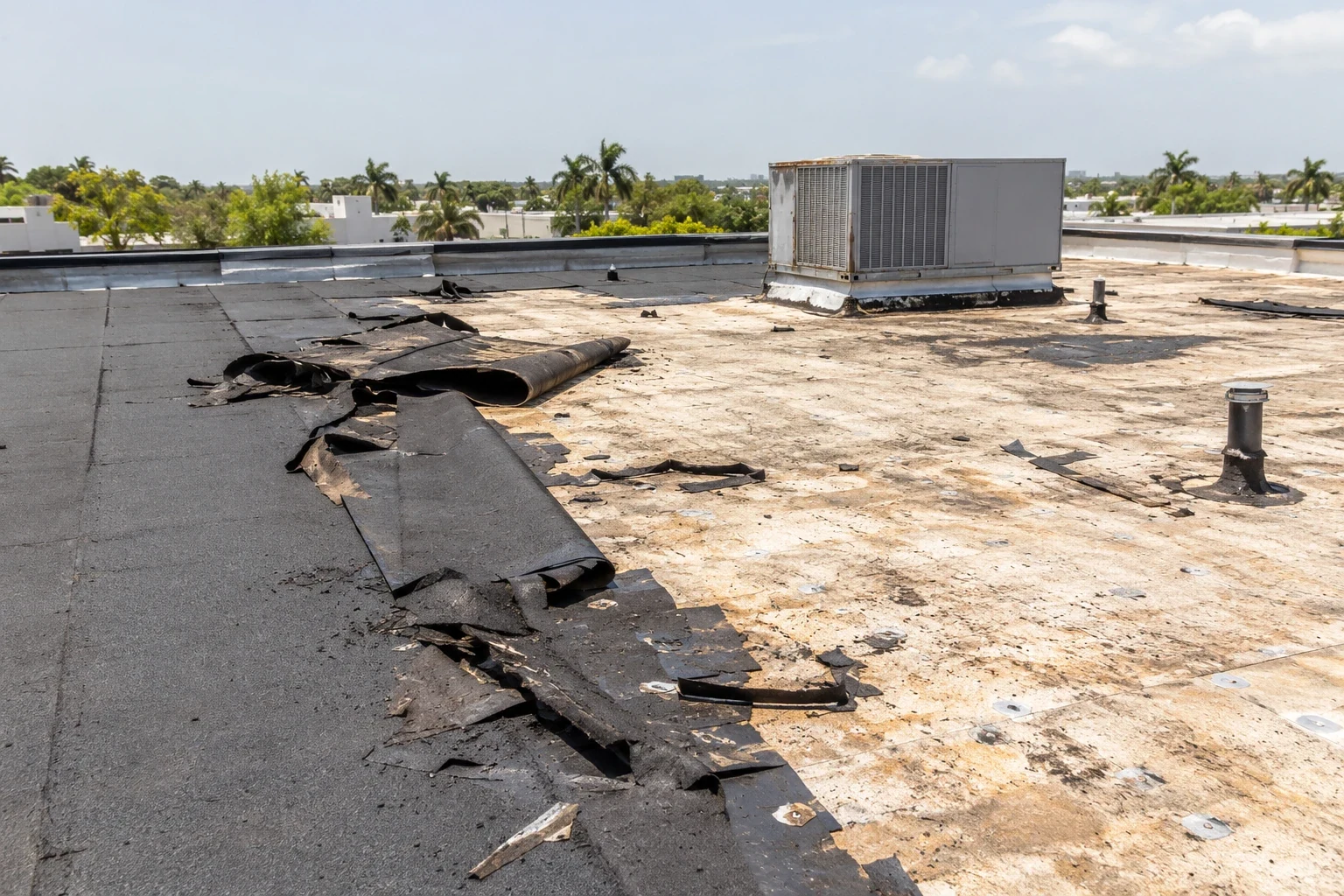
A replacement begins with test cuts and close inspection where the roof has changed: around drains, curbs, laps, penetrations, wall transitions and areas with repeated ponding. We look for wet insulation, crushed cover board, loose attachment, brittle surfacing and repairs that no longer hold. We mark each condition by roof section so the replacement scope separates sound areas from material that needs removal. Where the roof is dry and stable, we document that too. This distinction helps an owner compare a full tear-off with a limited repair or a compliant roof recover option without guessing what sits below the membrane.
Miramar's commercial land-use includes office-park and employment-center districts. We verify the roof layers and actual assembly at each building before proposing materials. That check matters when earlier repairs have added layers or when equipment changes have left abandoned curbs. Removing material exposes the deck and gives the crew a chance to correct wet sections, damaged attachment and unstable transitions before the new roof is installed.
Where does South Florida weather find a weak point?
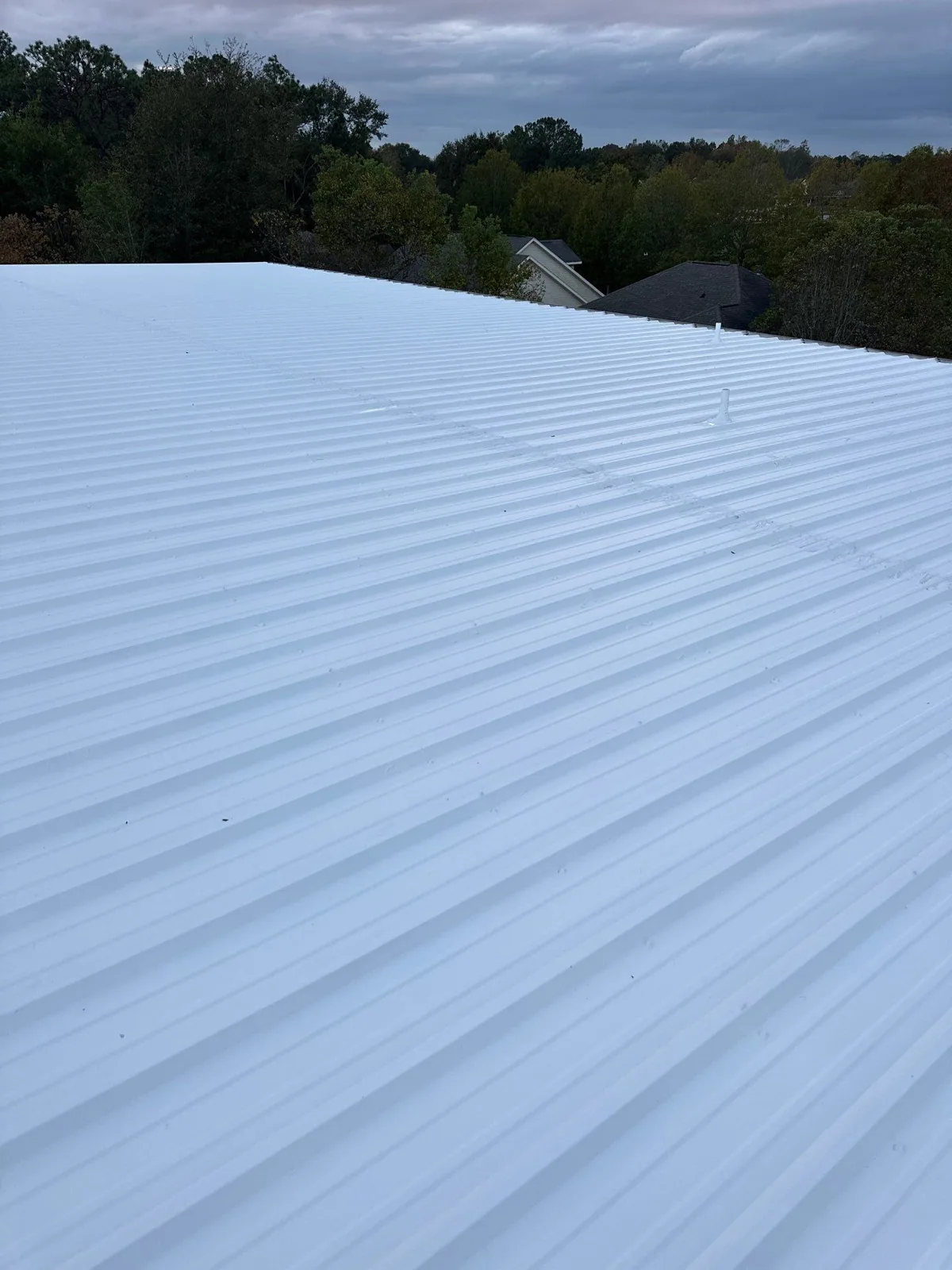
Heavy rain tests drain bowls, scuppers and every lap that has begun to open. Wind puts pressure on edge metal, corners and perimeter attachment. Hurricane Katrina brought sustained winds around 80 mph in South Florida. Before replacement, we document existing perimeter attachment and equipment flashing. After severe wind, we inspect those details for movement and set a repair boundary from what the roof shows. We check the existing edge, deck and fastening pattern, then match the replacement attachment to the verified assembly and project requirements.
A new membrane cannot correct a blocked drain or a badly supported curb by itself. We review the drain path, identify low areas and note where water can reach an open seam or flashing joint. On roofs with many penetrations, the scope gives each transition room for a secure, inspectable detail. The same care applies to post-hurricane roof damage: document disturbed edges, lifted seams and interior water entry before temporary measures or replacement work change the evidence.
How can the crew work around live operations?
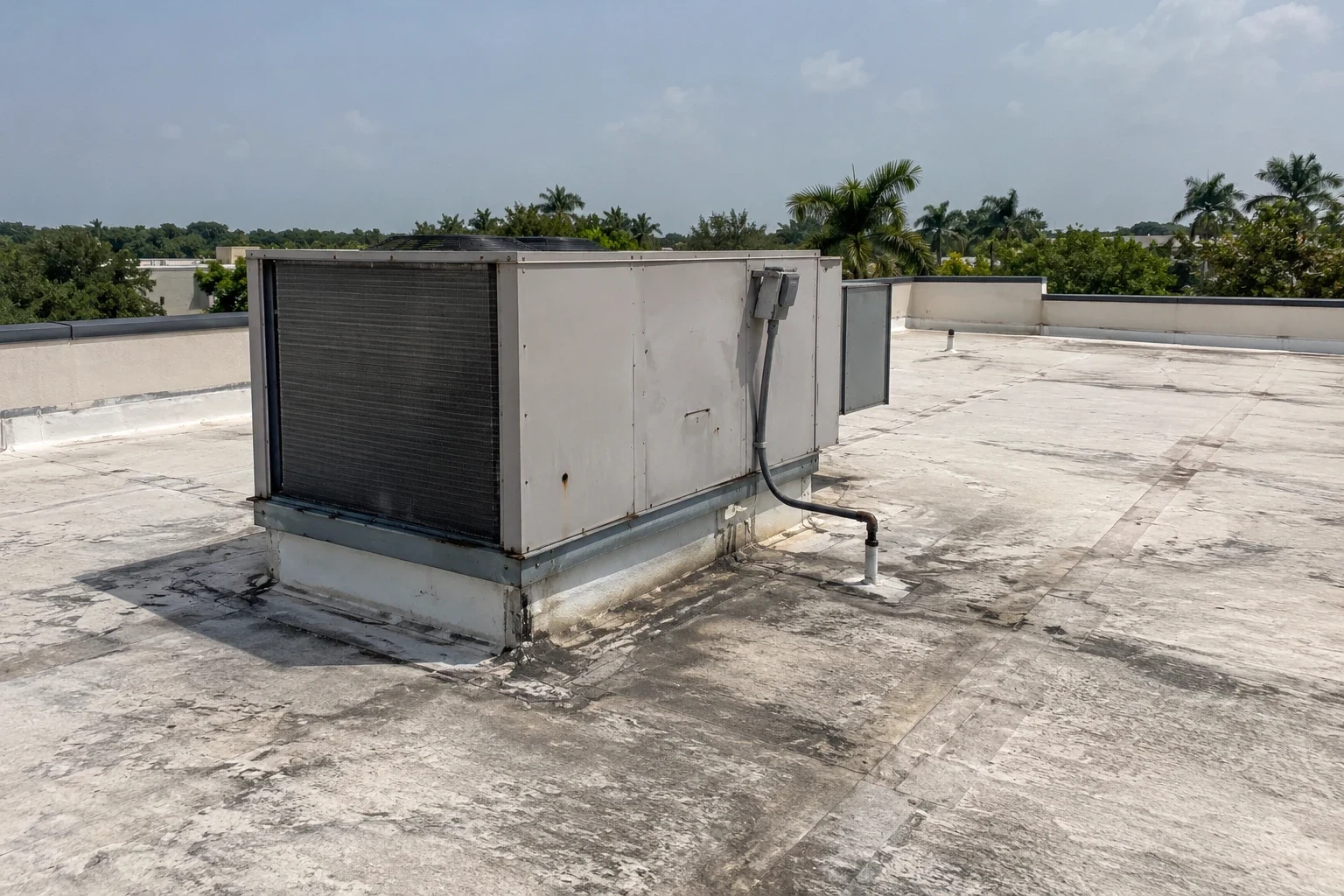
Before tear-off, we map roof access, material staging, lift zones, drain protection and the sections that need temporary dry-in at the end of each shift. A distribution building may need loading doors kept clear; an office property may need quiet work periods and protected entrances. Pembroke Pines concentrates most commercial development along Pines Boulevard. Roof access and material staging still need a property-level schedule before deliveries are set. The property contact helps set the delivery window and pedestrian route before replacement materials reach the loading edge. Our occupied-building reroofing approach keeps those operating limits in the work plan.
We divide the roof into sections that can be opened, dried, inspected and closed in a controlled sequence. If weather threatens, the crew secures the exposed area before leaving. Equipment curbs, exhausts, condensate lines and electrical pathways remain accessible for the trades that need them. We confirm who can isolate equipment and who will provide roof access. That coordination prevents a new membrane from being cut later for work that could have been scheduled before installation.
Which system fits the deck and budget step?
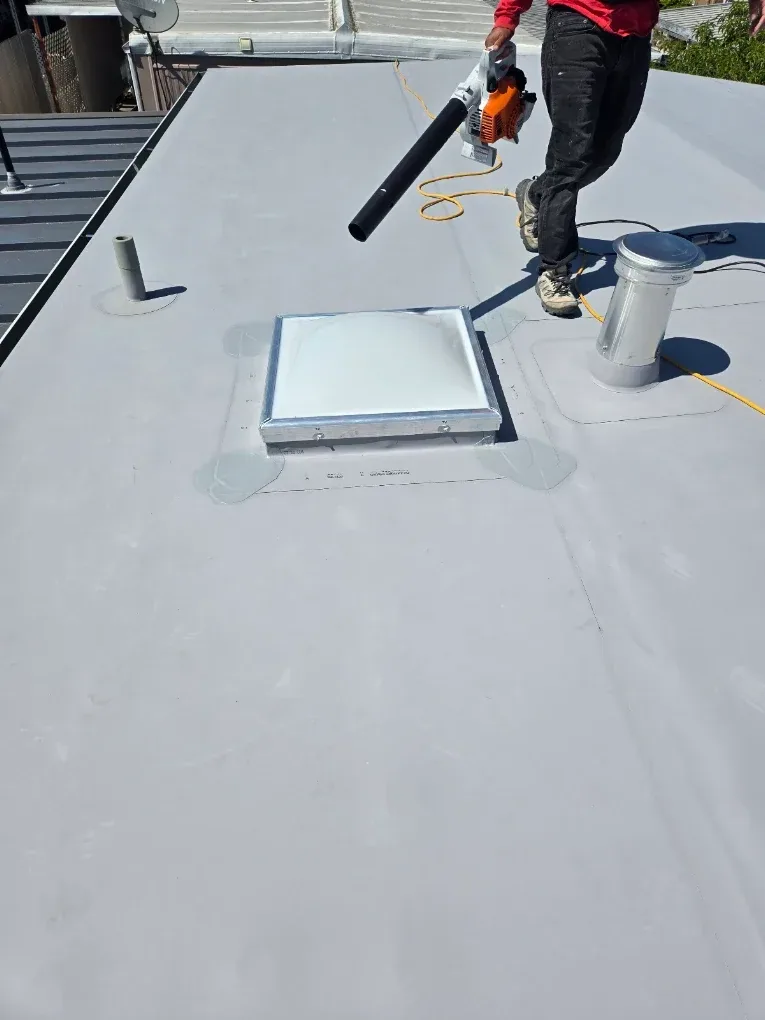
The right system depends on deck condition, slope, drainage, existing layers, rooftop traffic and the attachment the building can support. A single-ply assembly such as TPO roofing may suit a sound low-slope deck when seams, insulation and perimeter details can be built correctly. Other assemblies may call for PVC, EPDM, modified bitumen or a different specified system. We compare those options against the roof findings and the owner's operating requirements, rather than selecting by color or a generic product claim.
Replacement cost changes with tear-off depth, wet insulation, deck repairs, crane access, equipment relocation and the amount of edge or flashing work. The estimate should identify those drivers separately. A phased replacement can spread disruption, but only when drainage, tie-ins and temporary edges can be protected between phases. A roof capital plan can record which sections are urgent and which can wait for a later budget cycle. Florida’s Turnpike and I-75 cross Miramar. Confirm the property’s own access and delivery schedule before booking equipment.
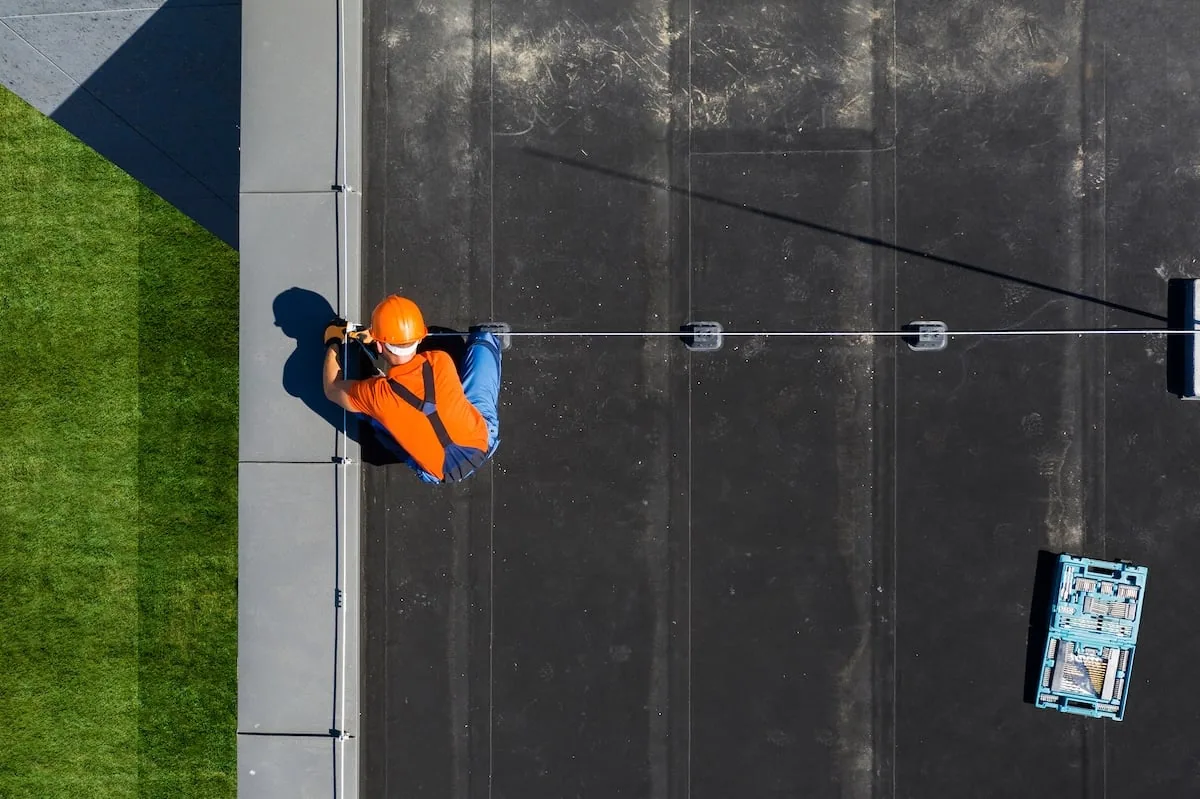
More about Commercial Roof Replacement
What should be in the closeout record?
At completion, the owner should have a clear record of the areas opened, deck repairs made, insulation replaced, system installed and details completed. We photograph concealed conditions before they are covered and keep those images with the final scope. The crew also checks drain openings, terminations, curb flashings and edge metal as a connected assembly. If the replacement is completed in sections, the record shows the tie-in locations and the date each area was closed.
We review the finished work with the property contact and identify any access or maintenance considerations that affect the new roof. That may include keeping service paths clear, reporting a puncture promptly or arranging inspection after severe weather. The Pines Boulevard commercial corridor is one of several local areas where occupied retail and office schedules can shape roofing logistics. Schedule a roof review in Miramar, and we will explain whether the roof needs full replacement, a recover assembly or a smaller repair boundary.
Commercial Roofing Questions
How do you decide between tear-off and a recover?
The existing layers decide the starting point. We inspect for wet insulation, deck damage, trapped moisture, unstable attachment and the number of roof layers before recommending a recover. When the assembly is dry and the code and system requirements allow another layer, a recover may reduce tear-off. Where moisture or deck conditions undermine the base, removal lets us correct those areas before installing the new roof. We record the findings so the choice follows the building rather than a blanket rule.
Can replacement happen while tenants and staff remain inside?
Work can be sequenced around occupied areas when access, noise, deliveries and temporary protection are planned. We divide the roof into manageable work zones, coordinate entrances and loading paths, and protect exposed areas at the end of each shift. The property contact helps set restricted hours and identify critical equipment. Weather can change a daily sequence, so we keep the dry-in plan visible and adjust the work area when conditions call for it.
What does wet insulation change in the proposal?
A wet area changes both the tear-off quantity and the repair scope. We locate moisture with inspection and, where useful, testing, then mark the affected zones before pricing the replacement. The proposal should show whether insulation and cover board are being removed, how deck repairs are handled, and how sound material is protected. That detail gives the owner a fair comparison between a broad replacement and a repair limited to a verified boundary.
How do you protect drains during a full tear-off?
Drain protection is planned before membrane removal. We keep debris out of bowls and piping, maintain temporary drainage as each section opens, and check discharge paths as work progresses. The crew also avoids sealing a transition that needs to remain open for safe water flow. Before closeout, we verify drain openings and review the roof's low areas so a new membrane is not left serving a drainage problem that should have been corrected.
What can delay a commercial replacement after work starts?
Deck damage, hidden moisture, equipment conflicts and rain are common schedule drivers. A test cut may expose a condition that was not visible from above, and the owner needs a chance to approve the added repair before the crew covers it. Crane access or trade shutdowns can also affect sequence. We identify those decisions in the scope, document concealed conditions with photos, and close each opened section before moving the work area.
Miramar, Pembroke Pines, Davie, Hollywood, Opa-locka, Miami Gardens, Miami Lakes and Doral in Broward and northern Miami-Dade County.
Request a Roof Assessment
Send the building address and what the roof is doing. We reply with a roof visit date and a written scope.