Manufacturing Plant Roofing in Miramar, FL
Production equipment cannot always move because a roof detail is leaking. A manufacturing plant in Miramar needs repair work coordinated with exhausts, service routes, loading and the interior process below. We inspect the roof membrane, drains, edges, penetrations and equipment supports, then connect each finding to the section it affects. The owner can see whether a local repair will hold, whether moisture extends into insulation, or whether the assembly needs a larger scope. Miramar's land-use map includes industrial and employment-center categories. Davie includes manufacturing, distribution, healthcare and technology among its listed industries. A roof condition inspection provides the basis for work planning without assuming every plant has the same roof or process.
Where can plant equipment stress the roof?
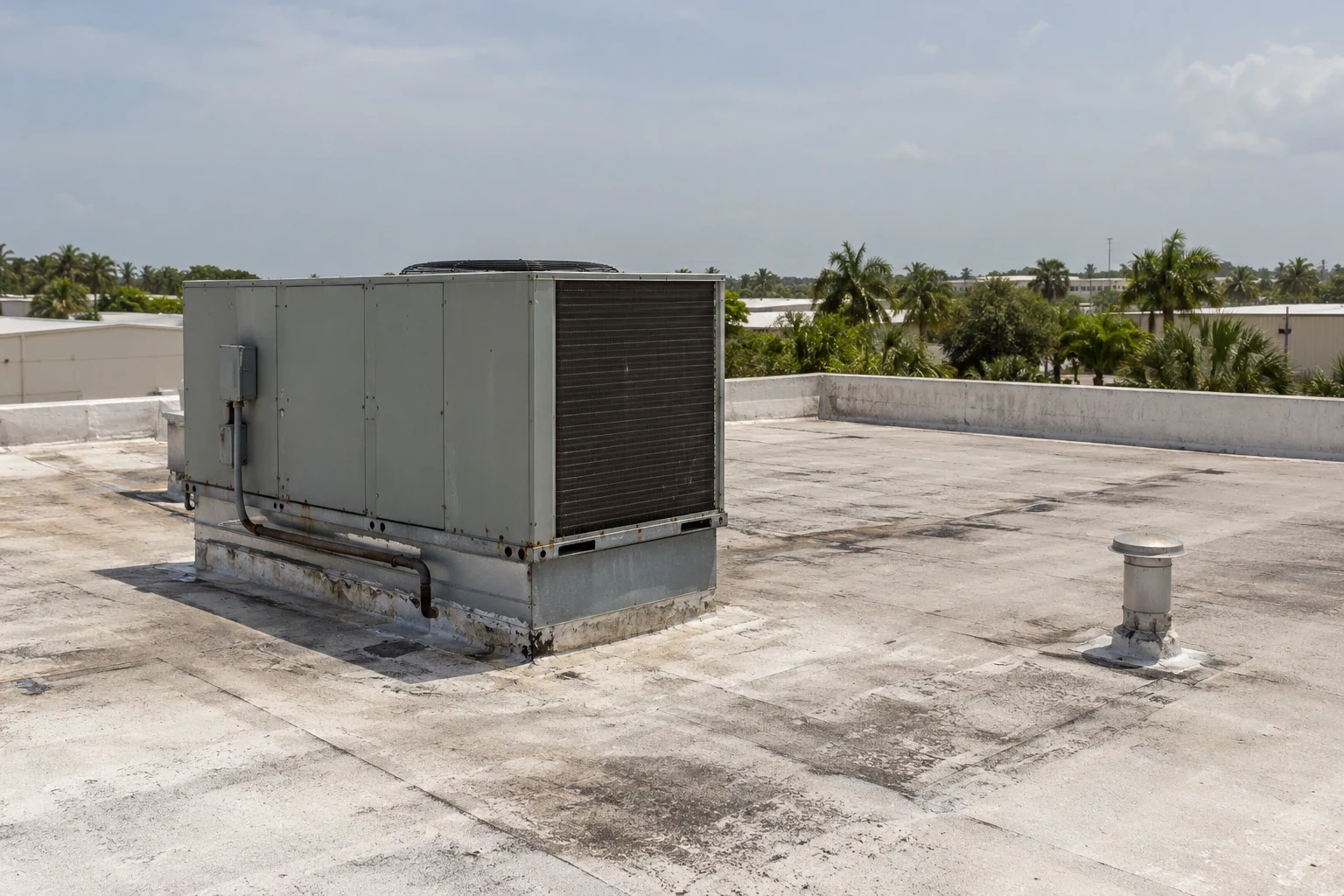
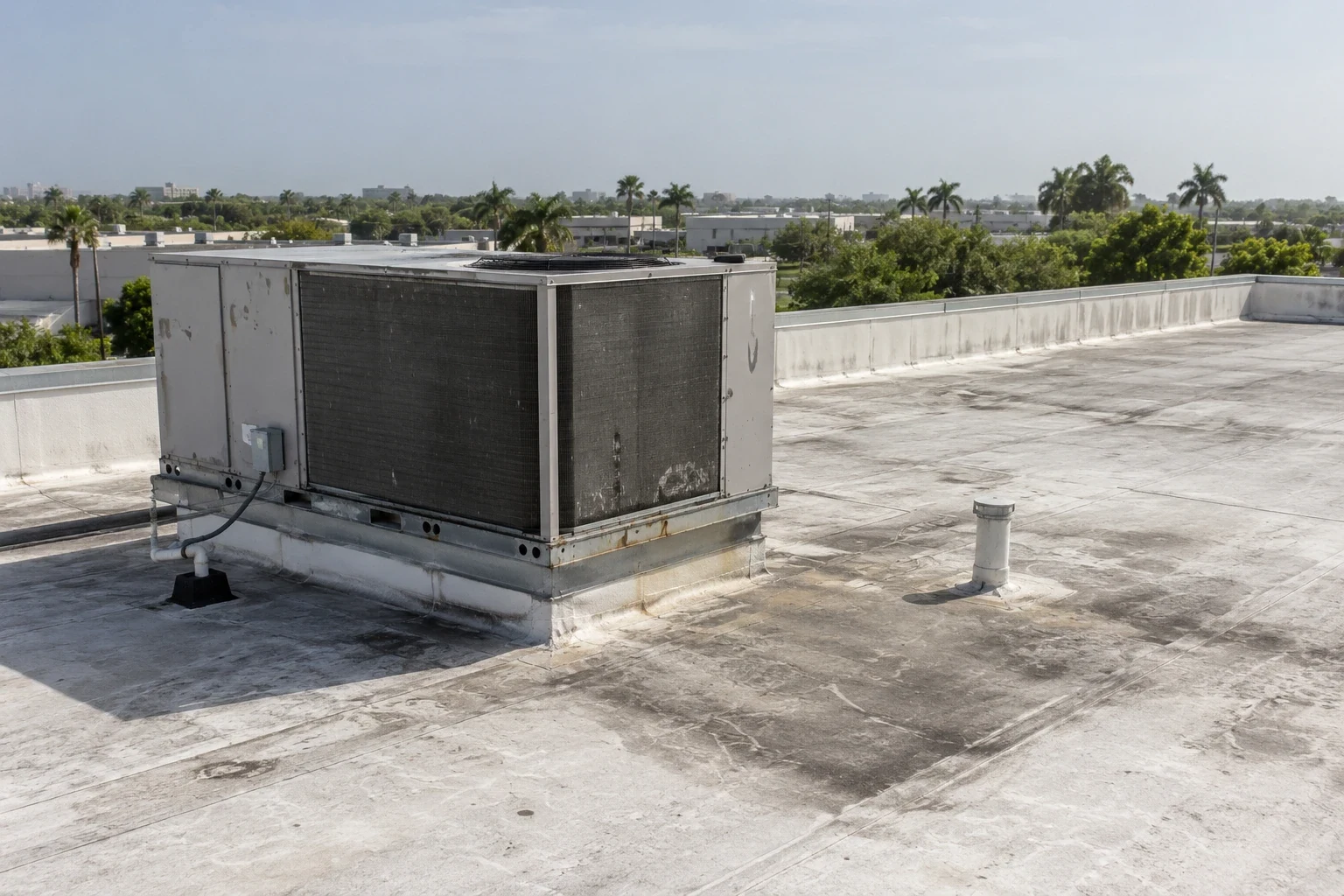
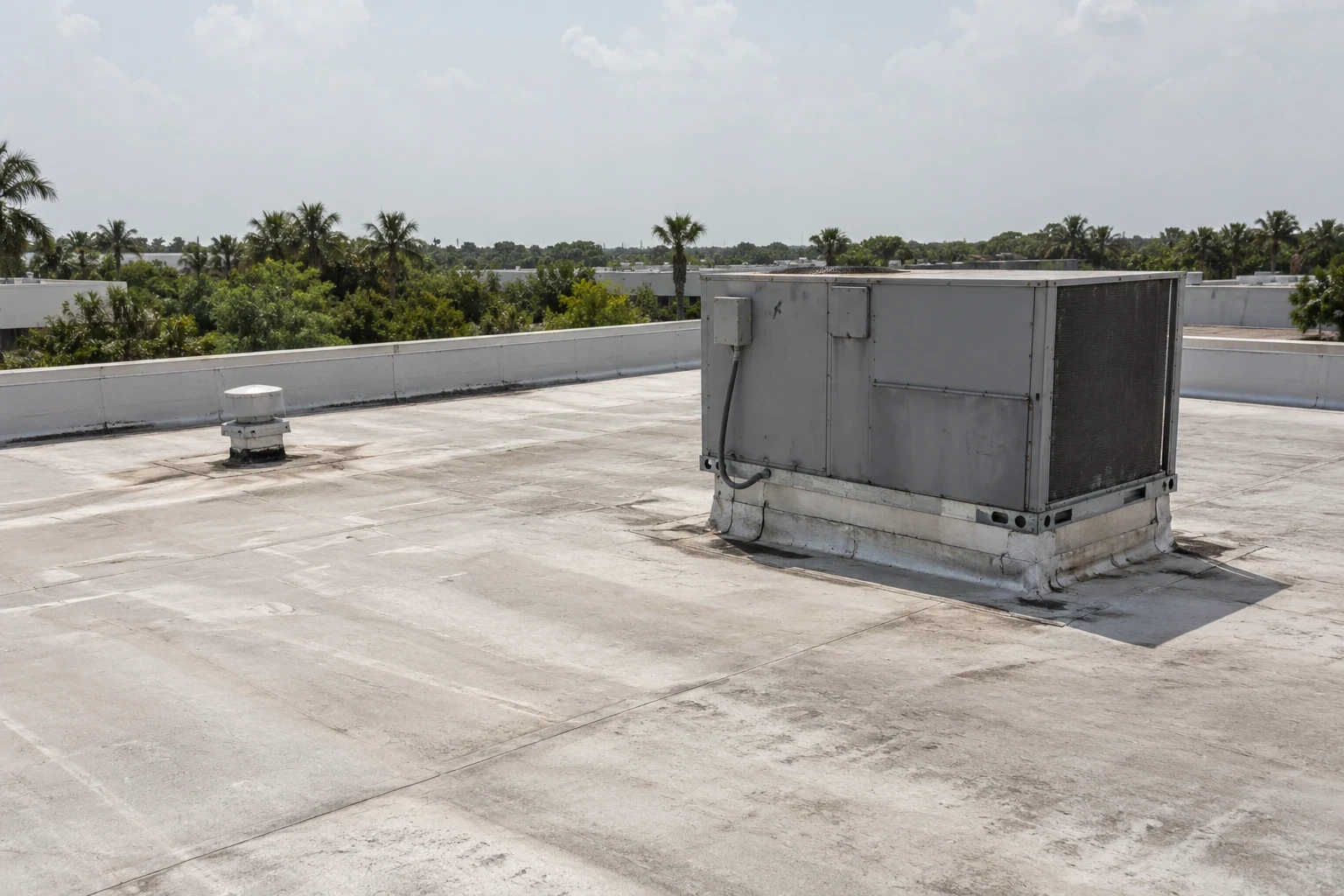
Exhausts, pipes, curbs, conduits and maintenance walkways create transitions through or across the roof. We inspect flashing at each base, check for movement and look for open seams where vibration or repeated service has affected the membrane. A failed detail can send water toward production space even when the roof field remains intact. We compare the roof condition with interior reports and mark wet insulation separately from surface damage. That keeps a repair limited to the material that needs work while exposing any condition that would change the scope.
Miramar's industrial and regional-activity land-use categories sit within a city crossed by Florida's Turnpike, I-75, US 441 and US 27. For a plant near those routes, deliveries and crew staging need to fit the site's operating plan. We confirm roof access, controlled areas and equipment shutdowns with the facility contact. A curb and support inspection can clarify where a mechanical trade must coordinate before roofing repairs begin. If the plant also has large warehouse zones, a warehouse roof review can address loading and inventory access as separate building needs.
How do rain and wind change the inspection?
Rain tests drain bowls, scuppers, seams and flashing joints. Wind can pull at perimeter details, edge metal and rooftop equipment transitions. Production schedules and process areas shape safe roof access; the plant contact identifies shutdown rules and protected routes. We use that exposure to check attachment, water flow and visible damage after a reported event, then distinguish new conditions from existing wear where the roof record allows. If access is limited during production, we agree on a safe inspection route and keep the observation tied to the available evidence.
Rain and wind hazards make roof access, drainage and perimeter attachment part of the inspection. We review the assembly directly and document observed conditions. If wind has moved edge components, a wind-damage assessment can document attachment and transitions. Where water has entered, leak tracing helps identify the opening before a permanent repair is priced. Production staff should flag active lines, roof-mounted process equipment and shutdown coordination before a repair window.
When does a repair become a replacement decision?
At a manufacturing plant, compare repair and replacement against the affected process area, not only the roof square footage. A contained puncture or open lap may be repairable when surrounding membrane, insulation and deck remain sound. Repeated wet areas, loose attachment or deteriorated substrate may require removal beyond the visible leak. Map each test area, note production or air-intake restrictions, and confirm who can release a shutdown or approve concealed-condition work. If removal is proposed, define the daily opening, dry-in boundary, debris route and return-to-service check before the shift begins. A replacement assessment can compare recover and tear-off using the verified assembly. For a property with a separate logistics building, a distribution roof plan can address that operating profile without combining its condition with the plant roof.
How can work avoid a production interruption?
Before the crew arrives, the site contact identifies operating hours, restricted areas, roof access, lift paths and equipment that cannot be interrupted. We agree on a work window with the process lead and any trade that must shut down or move equipment. The roof is divided into sections that can be opened, inspected and closed safely. Drains are protected from debris, temporary water paths remain open and each exposed area receives a dry-in before the crew leaves. A concealed deck or insulation condition is photographed and reviewed before it is covered.
Miramar's redevelopment includes infill, replacement and reuse within areas already developed. Phased work at a plant can account for active operations and equipment access. A phased reroof schedule can define boundaries for noise, material staging and access. We coordinate deliveries with the property's route plan instead of assuming a roadway is clear at a given hour. For Miramar plants, a roof assessment can be coordinated with the facility representative and approved work window.
More about Manufacturing Plant Roofing
What information belongs in the closeout?
The owner should receive a record of roof sections opened, concealed conditions found, materials installed, details completed and any work that remains. We photograph the deck or insulation before it disappears and identify the curb, seam or drain tied to each repair. If production required a restricted window, the record notes the work area and date so maintenance staff can plan a follow-up without recreating the original sequence. This is especially useful when mechanical service will return to the same roof zone.
Cost and timing depend on tear-off depth, wet insulation, deck repairs, equipment coordination, staging and detail count. A proposal should state these drivers and describe any condition that requires owner approval after opening. A written capital plan can set priorities across sections while keeping urgent water entry separate from longer-term work. The release record also notes the approved roof-access path and reopening time. Each facility's access and roof assembly require a separate review. Schedule a plant roof assessment in Miramar and we will explain the observed condition, repair boundary and next budget step.
Commercial Roofing Questions
Can roof work happen while production equipment stays on?
The equipment, roof detail and site safety rules determine what can remain in service. We coordinate any shutdown with the responsible operator, protect equipment and set a work zone before opening the roof. The schedule identifies where a trade needs access so flashing is not rebuilt before its work is complete.
What if a roof leak is above a controlled production area?
We coordinate access and interior protection with the facility contact, then inspect the roof zone above the report. A small opening can send water along insulation or deck before it reaches the room. We document the path and repair boundary, and define temporary protection separately when water entry cannot wait for a larger project.
How do you handle exhaust stacks and process piping?
We check flashing, support stability, clearance and the membrane around each penetration. If a process line or stack must move, the plant's mechanical or process trade coordinates that work before roofing closes the detail. Photos show the existing condition and the completed tie-in for future service.
Does a storm inspection confirm that wind caused the damage?
The inspection records what is visible, such as moved edge metal, open seams or displaced equipment details. We compare those observations with existing roof records and interior reports. If the cause is uncertain, we say what remains to be tested rather than assigning damage without evidence.
What can change the plant roofing budget after tear-off?
Wet insulation, deck deterioration, unexpected layers, equipment conflicts and access changes can add work. We photograph concealed conditions, identify the affected area and request direction from the owner before adding repairs. The proposal should explain which conditions are visible and which can only be confirmed after removal.
Miramar, Pembroke Pines, Davie, Hollywood, Opa-locka, Miami Gardens, Miami Lakes and Doral in Broward and northern Miami-Dade County.
Request a Roof Assessment
Send the building address and what the roof is doing. We reply with a roof visit date and a written scope.