
Occupied-Building Reroofing in Miramar, FL
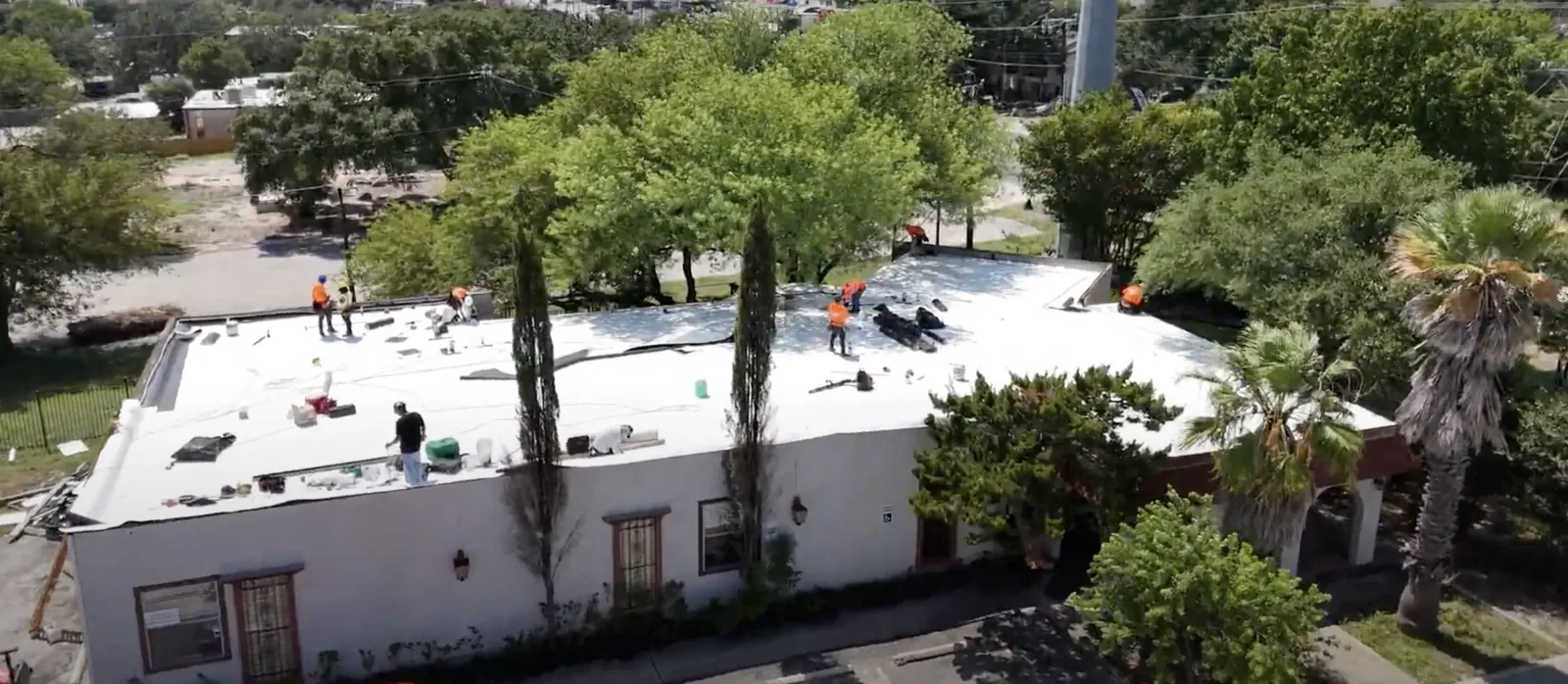
A storefront can stay open while its roof is replaced, but the work zone must be planned around people below. In Miramar, commercial and industrial uses sit beside office parks, regional activity areas and active road corridors. We divide the roof into sections, agree on access and delivery windows, and close each exposed area before moving on. The sequence protects the building from rain while limiting disruption to entrances, loading and rooftop equipment. We first confirm the existing assembly and identify wet material or deck repairs that could change the daily plan. A replacement review gives the owner a scope that connects roof condition to building operations.
Which areas need a work boundary?
We mark roof sections, material staging, hoisting points, drain protection and the path crews will use. Below the roof, the plan identifies entrances, loading doors, pedestrian routes, sensitive rooms and areas where noise or debris control matters. The property contact helps set quiet periods and restricted access. We keep roof openings small enough to inspect, repair and dry-in in a controlled sequence. If hidden wet insulation or deck damage appears, we document it and review the added work before that section is closed.
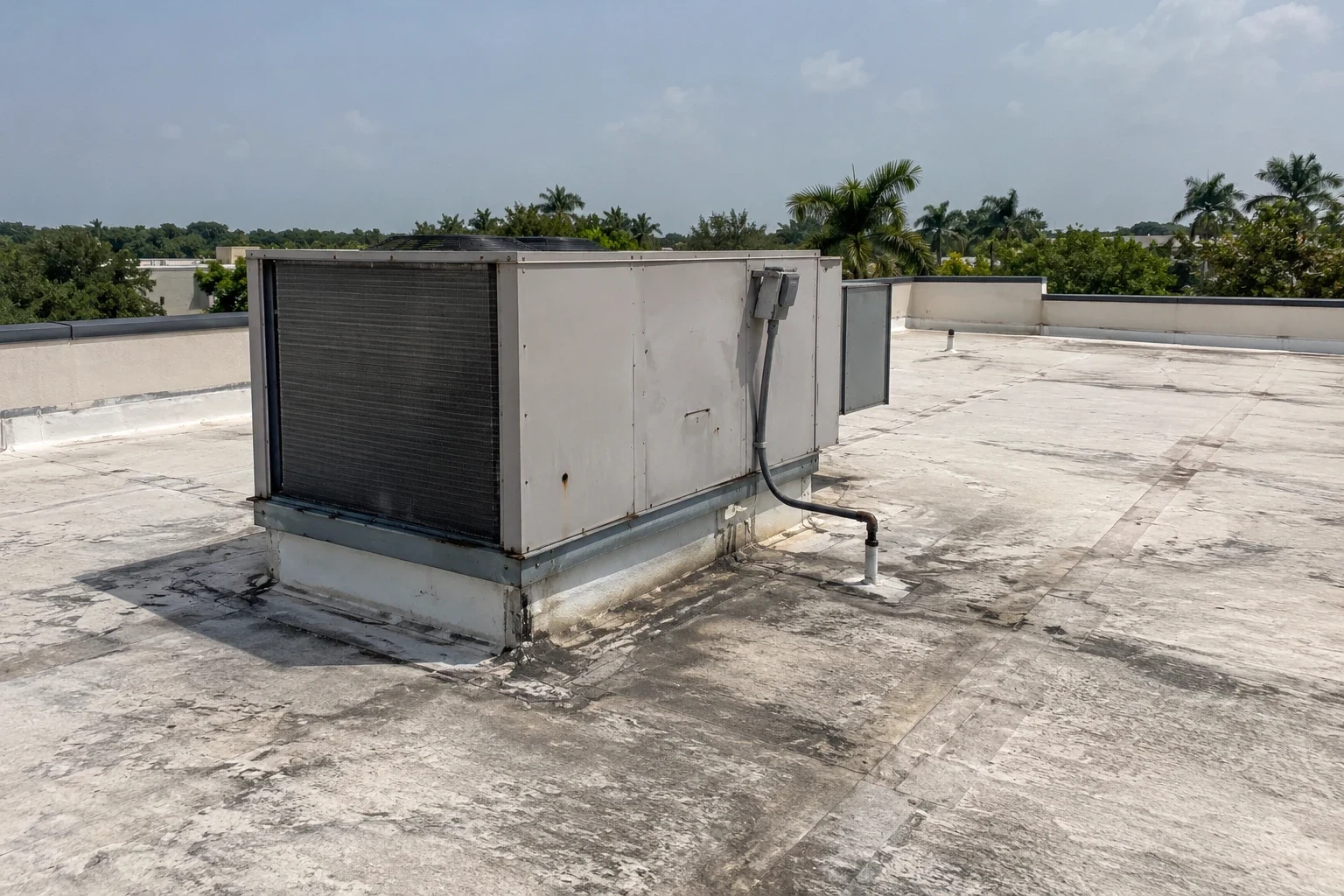
Miramar's land-use categories include commercial, industrial, employment-center and office-park areas. A property may combine equipment, tenants and service areas, so the daily plan needs actual building information rather than a generic work window. Near the Flamingo Road and Miramar Parkway intersection, the mix includes shopping plazas and professional offices. We coordinate tenant notices and safe routes with site management where those uses are present. A curb and equipment review helps identify shutdown needs and service clearances before the membrane work reaches rooftop units.
How does the roof stay dry overnight?
Each shift opens a defined section, removes material scheduled for that day and restores the weather barrier before the crew leaves. We check forecast conditions, temporary drainage, tie-in edges and any area that cannot be completed within the work window. The end-of-day review confirms that drains remain open and the temporary seal does not direct water into the next section. If rain arrives sooner than expected, the crew protects the exposed assembly and adjusts the next opening to match conditions.
Before opening a section above occupied space, we agree on interior protection, temporary dry-in, and a safe stopping point for each shift. Those conditions make daily protection and clear drainage important during an active reroof. We record the section closed, the tie-in location and any concealed condition found during removal. Miramar's regional routes include the Turnpike, I-75, US 441 and US 27. Deliveries and lifts can affect site circulation near those corridors, so we confirm the route and staging point with management. A drainage detail review can catch blocked bowls and scuppers before tear-off exposes a section to weather.
What should tenants know before work starts?
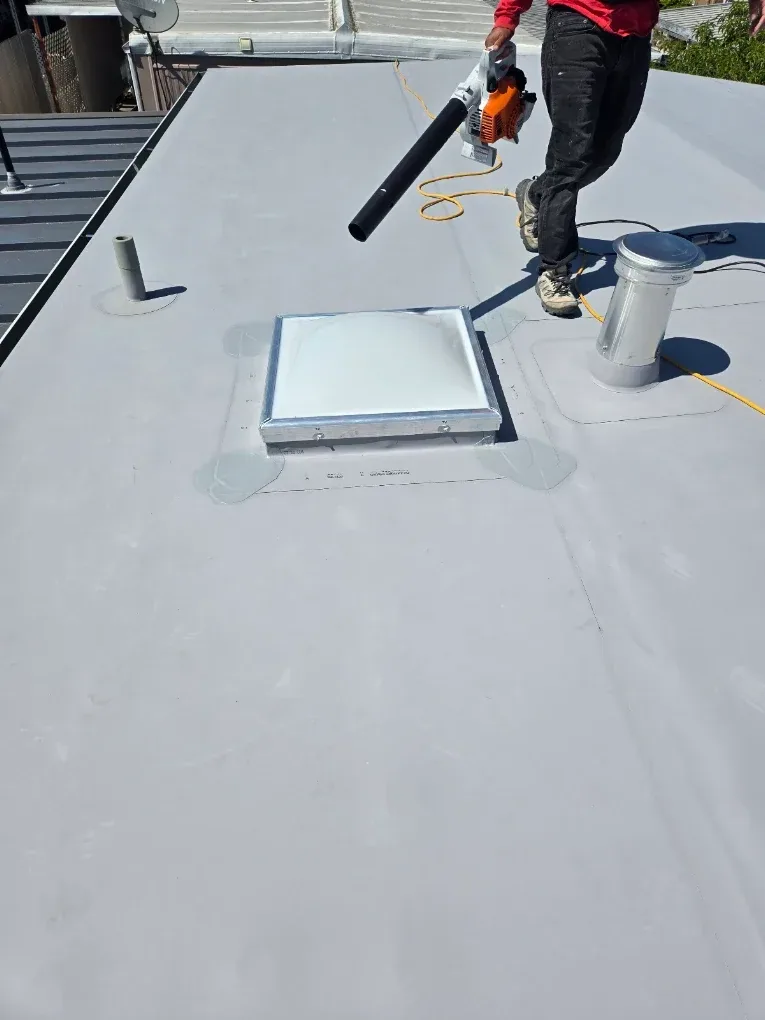
Notice should identify the work area, expected noise, access changes, loading restrictions and the contact for urgent building concerns. We help the owner translate the roof sequence into practical information, including which entrance stays open and when a lift or delivery will arrive. Sensitive operations may need a protected interior area or a scheduled equipment shutdown. The site contact confirms these details with tenants so the roofing crew is not making access decisions at the roof hatch.
Pembroke Pines' commercial development is concentrated along Pines Boulevard, with retail, office and industrial parks in its commercial inventory. For an occupied site near that corridor, deliveries, customer access and loading can share limited space. We plan material staging with management and keep required paths visible. For more extensive work, a recover option may reduce removal activity when the roof condition and applicable requirements allow it. A recover is not a substitute for correcting wet insulation or unstable material, so the inspection determines whether that route fits the building.

What happens when hidden damage changes the scope?
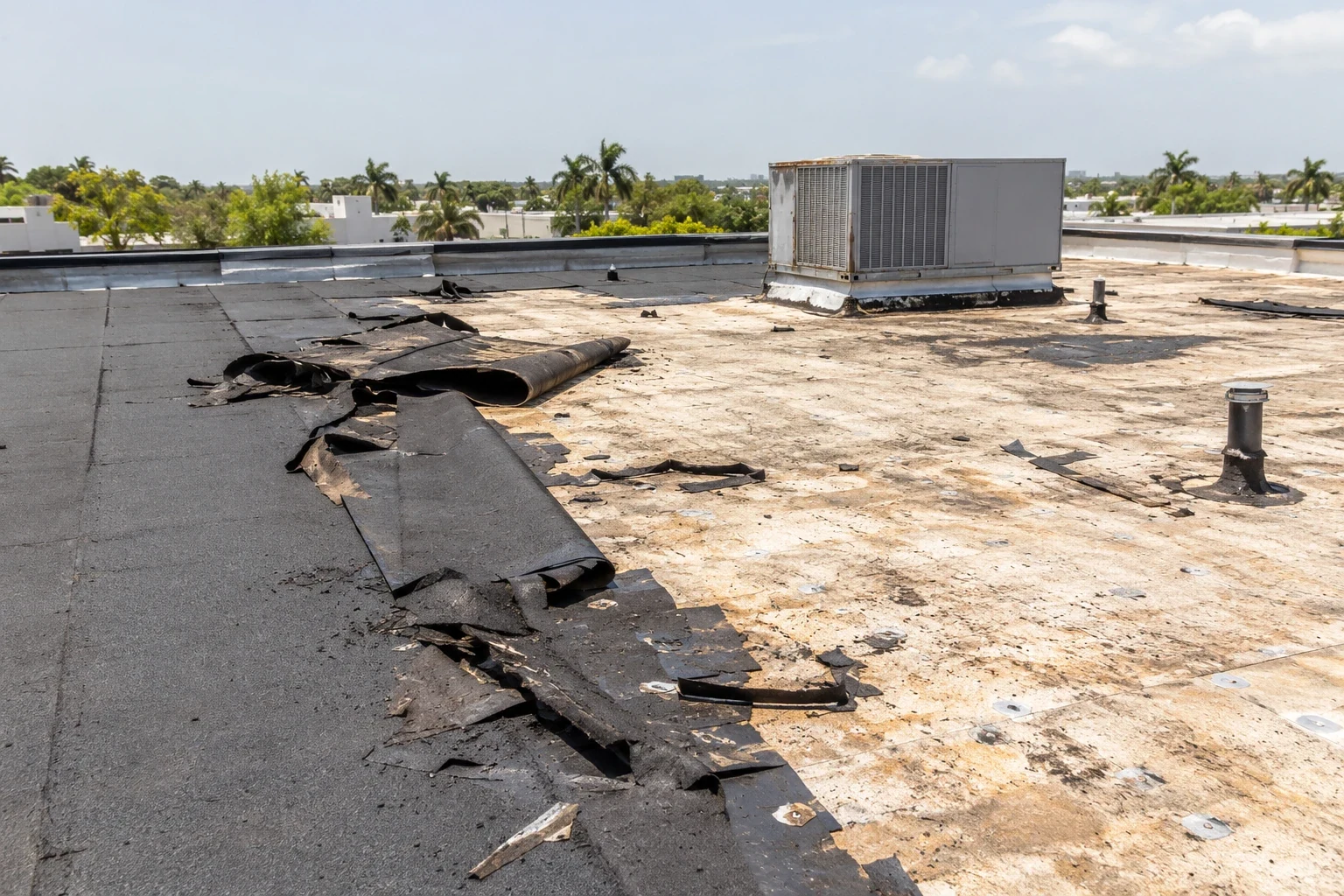
Removal can expose wet insulation, deteriorated deck, weak attachment or an older repair that was not visible from above. We stop at the affected boundary, photograph the condition and explain what needs to be replaced before covering it. The owner can then approve a defined correction instead of discovering after closeout that the assembly changed. The scope should also say who can authorize concealed-condition work and how that decision affects the day's dry-in.
Replacement cost and duration depend on tear-off layers, wet material, deck repairs, equipment relocation, roof access and edge details. We list those drivers and keep the price tied to observed work. Before a temporary response, we identify the occupied area below the leak and confirm safe access with the property contact. An emergency roof repair scope can be separated from the occupied-building sequence and documented before crews move to another roof section. A capital plan can separate immediate protection from later roof sections. The condition report keeps photos and repair boundaries with the owner after work is complete.
More about Occupied-Building Reroofing
What should the property team receive?
At closeout, the owner should be able to match each completed roof section to a date, system, tie-in and photo record. We review drains, edge metal, curbs and transitions as connected details. The record notes any area that needs follow-up and any service path that should stay clear. If the project was phased, the sequence shows where temporary tie-ins became permanent work and which sections remain in a later budget step.
Near the Miramar Town Center, mixed-use redevelopment and access to I-75 and the Turnpike put site circulation into the project conversation. We work with the contact for the actual property to confirm loading, roof access and tenant needs. For a broad roof with multiple stages, a post-work roof inspection can document the finished areas and note remaining maintenance. For Miramar properties, a commercial roof review can align the roof sections with operating hours and the sequence approved by ownership. The recommendation follows observed roof conditions and site constraints.
Commercial Roofing Questions
How do you choose which roof section opens first?
We compare condition, drainage, access, interior use and the crew's ability to close the section that day. A leak or damaged edge may need earlier attention, while an entrance or loading area can shape staging. We review the sequence with management so each opening has a defined work boundary and dry-in plan.
Can deliveries continue during tear-off?
They can when the property layout and work schedule allow safe separation. We confirm delivery windows, lift locations and pedestrian routes with the site contact before materials arrive. If loading must pause near a work zone, the owner can notify tenants and arrange an alternate route for that period.
What if a roof section is open when weather turns?
The crew protects the exposed area and secures the tie-in before leaving. Daily scope is set with weather and roof conditions in mind, but conditions can change. We keep temporary drainage open, document the protected section and adjust the next day's opening rather than leaving a larger area exposed.
How are noise and interior concerns handled?
The owner identifies sensitive rooms, operating hours and tenant contact procedures before work begins. We plan noisy tasks and deliveries within the agreed window, protect areas below the active section and keep a clear path for urgent building access. If a concern changes the work area, the site contact and crew review it before proceeding.
Who approves concealed deck or insulation repairs?
The contract should name the owner representative who can review photographed concealed conditions and authorize added scope. We mark the affected zone, explain the correction and document the cost driver before covering it. That keeps a necessary roof repair tied to evidence and a clear project decision.
Miramar, Pembroke Pines, Davie, Hollywood, Opa-locka, Miami Gardens, Miami Lakes and Doral in Broward and northern Miami-Dade County.
Request a Roof Assessment
Send the building address and what the roof is doing. We reply with a roof visit date and a written scope.