Cold Storage Roofing in Miramar, FL
A freezer roof has to separate a cold interior from humid outside air. A small opening can let moisture reach insulation or the deck, where the damage may spread before a ceiling mark appears. Miramar's land-use categories include industrial and employment-center areas, where roof access and equipment coordination shape repair planning. We inspect seams, vapor-control details, curbs, drains and the interior reports provided by the facility. The goal is to locate wet material and define what must be repaired before the assembly is closed. A roof inspection gives the owner a condition-based starting point before authorizing work near temperature-controlled operations.
Where can moisture move through the roof?
Vapor-control layers, insulation, cover board and membrane work as an assembly. A split at a penetration or failed transition can allow warm, humid air to reach colder surfaces. Moisture may collect within the assembly or appear far from the original opening. We inspect changes in surface condition, open seams, flashing, roof edges and areas around refrigeration equipment. If a test opening is needed, we mark the location and the layers exposed, then compare the result with nearby roof sections before setting the removal limit.
Commercial development in Pembroke Pines concentrates along Pines Boulevard, and the city's inventory includes retail, office and industrial parks. We verify the roof assembly and equipment access at each property before selecting a repair detail. A warehouse roof review may focus on dry storage and loading, while this roof scope gives added attention to temperature changes and vapor control. A curb and support inspection can check the flashing around refrigeration units and rooftop service lines.
What role do drains and rooftop units play?
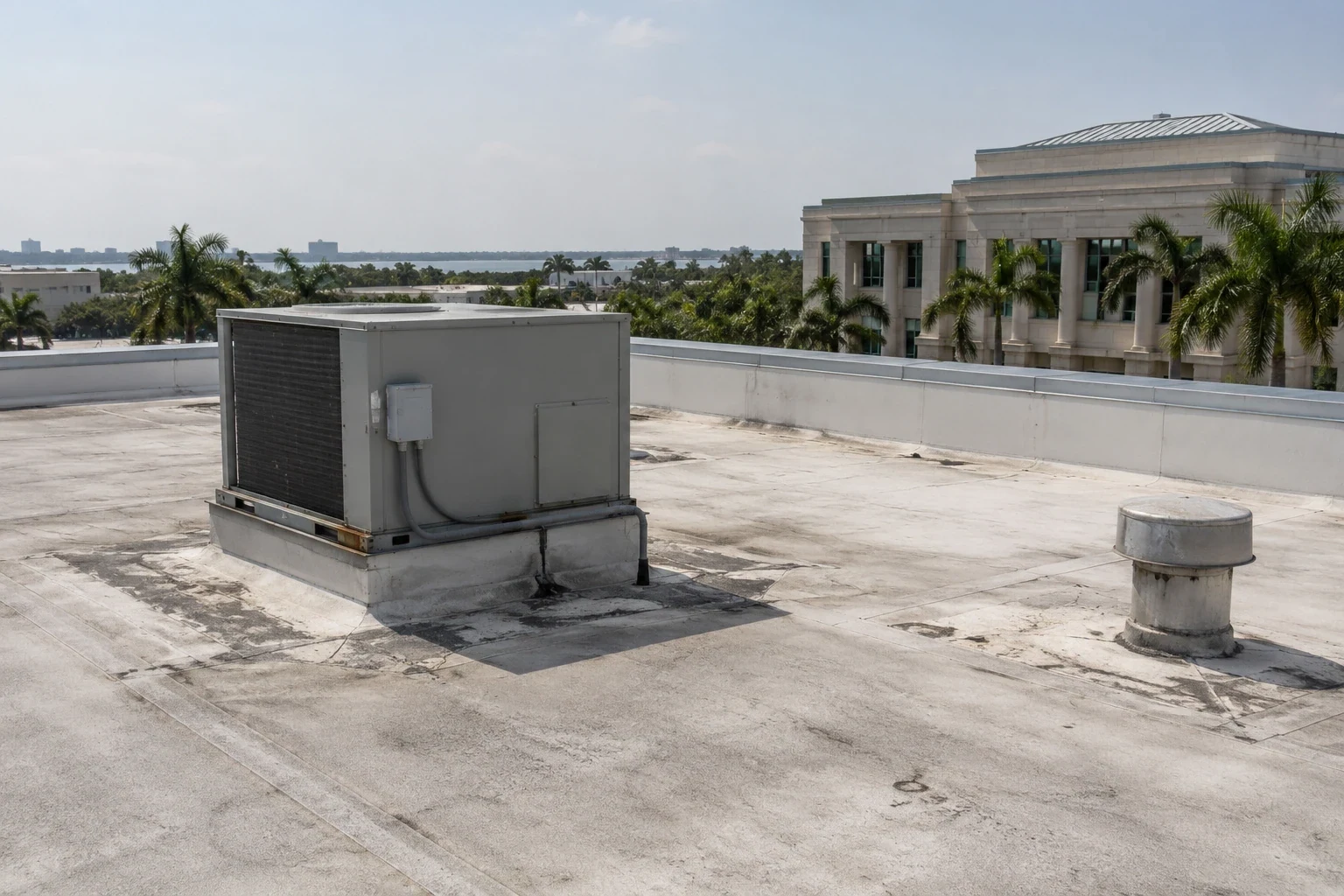
Standing water keeps pressure on laps, flashing and repaired areas. Drain bowls, scuppers and discharge routes need to stay open while work is underway and after closeout. We trace where water collects and check for low spots around equipment supports. Condensate lines and service work can create wet areas that look like roof leaks, so we compare the source, path and interior report before removing material. The written scope distinguishes a drainage correction from a membrane repair.
The facility team identifies dock cycles, temperature-sensitive operations and protected inventory zones. We check drainage and roof details against the observed assembly before setting a repair scope. Cold-storage work must respect refrigeration and receiving routines while the roof zone is open. The sequence identifies the section, temporary weather protection and access path with the property team before materials are staged. A drainage review can identify blocked outlets or scuppers before the next work section opens. If water is actively entering, leak tracing can establish where the roof needs repair.
How much insulation should the repair remove?
We extend inspection beyond the visible symptom until the wet boundary is understood. Material that has lost its integrity should not be covered by a new membrane or coating. Sound, dry layers can remain when the assembly and project requirements support that choice. The repair record marks the opening, insulation condition, deck, vapor-control transition and replacement materials. That gives the owner a clear reason for the work area and prevents the proposal from treating all roof sections as equally affected.
The facility contact sets operating limits for each cold-storage property. If damage extends across multiple zones, a replacement assessment can compare tear-off, insulation correction and a compatible new assembly. For a serviceable roof, a maintenance visit can track drains, penetrations and prior repairs. A photo condition record can connect each finding with the location and next action.
How can repair work fit the cold-room schedule?
The facility contact identifies production windows, restricted rooms, roof access and any equipment that must remain in service. We coordinate shutdowns with the responsible trade and protect the interior below each open section. Work is divided into areas that can be inspected, repaired and dried in within the planned shift. If hidden wet material appears, we photograph it, keep the opening protected and seek direction before changing the scope. The crew closes the section before leaving and confirms that drains remain clear. Before a section opens, confirm whether refrigeration lines, condensate and vapor barriers cross the planned cut. The work lead records how each layer will be restored at the curb and transition. The facility contact confirms whether temperature checks or equipment shutdowns are needed during the work. These details connect the repair boundary to building function and provide a clear handoff before the next shift.
For temperature-controlled storage, plan material deliveries around receiving periods and the refrigeration service window; the property team confirms the actual gate and staging area. A phased roof schedule can keep the work boundary clear for facility staff. The owner can review the proposed sequence against refrigeration requirements and loading activity before the crew arrives. We record which areas were opened and what was restored, so maintenance staff can follow up without mistaking roof work for changes to refrigeration equipment.
More about Cold Storage Roofing
What should the owner compare before approval?
Cost drivers include insulation removal, vapor-control repairs, deck condition, number of penetrations, drain corrections, equipment coordination and access. A proposal should state what is included and which concealed conditions could change after the roof is opened. Timing depends on the operating window, weather and the amount of area that can be closed safely each shift. We separate urgent water protection from permanent assembly work so the facility can make each decision with the condition record in view.
A written capital plan can compare repair areas with sections that remain serviceable. If a property has both warehouse and temperature-controlled space, distribution-center roof planning can address dock and shift needs without treating those roofs as identical. For a Miramar property, the facility contact sets roof access and delivery timing. The closeout record includes photos, locations and materials used at repaired transitions. The next maintenance review can then check the same places for movement or water entry.
Commercial Roofing Questions
Why can a cold-room leak show up far from the roof opening?
Moisture can move along insulation, deck joints or framing before it reaches the interior. We compare the reported area with seams, drains, penetrations and roof layers above it. Testing may be needed to confirm how far wet material extends before a repair boundary is set.
Can new membrane go over damp insulation?
Covering wet material can leave the problem inside the assembly. We inspect the exposed layers, map moisture and remove material that cannot remain. Dry, stable areas may be preserved if the system requirements support it. The written scope identifies where the repair starts and ends.
Do refrigeration units need to be shut down for roofing?
The detail, access and equipment location determine whether a shutdown is needed. We coordinate that decision with the refrigeration trade and facility contact before opening a curb or moving a line. The schedule should preserve required service access and avoid closing flashing before the equipment work is done.
How do you protect temperature-controlled operations during a repair?
We agree on a work window, protect the area below and open only a section that can be closed safely. The facility identifies sensitive rooms and any process limits. If concealed damage changes the sequence, we document the condition and review the added work before proceeding.
What belongs in the closeout after insulation replacement?
The record should show the roof zone, layers removed and installed, vapor-control transition, membrane tie-in and photos taken before closure. We note any area that could not be inspected or any follow-up required. That gives maintenance staff a useful baseline for the next roof review.
Miramar, Pembroke Pines, Davie, Hollywood, Opa-locka, Miami Gardens, Miami Lakes and Doral in Broward and northern Miami-Dade County.
Request a Roof Assessment
Send the building address and what the roof is doing. We reply with a roof visit date and a written scope.