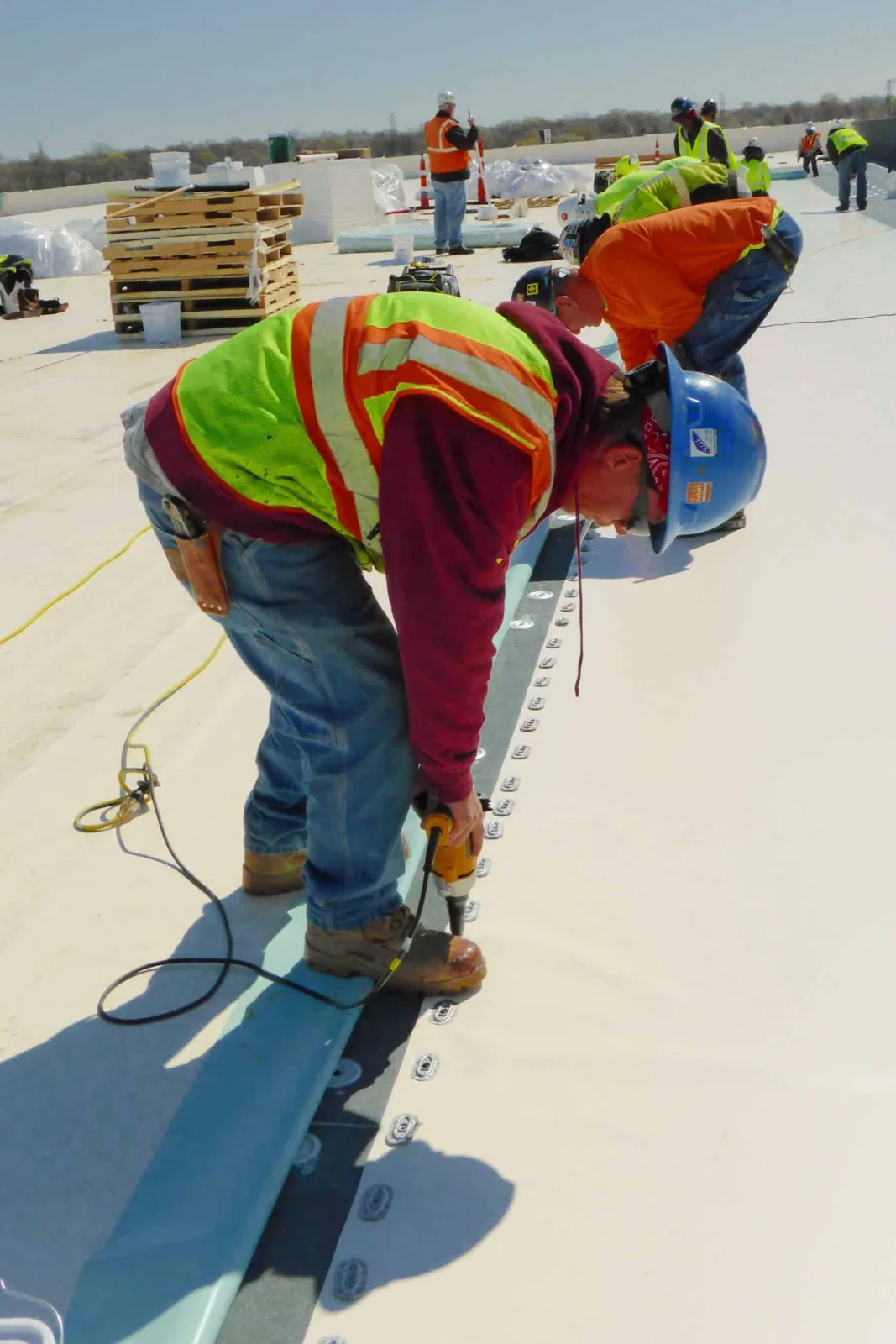
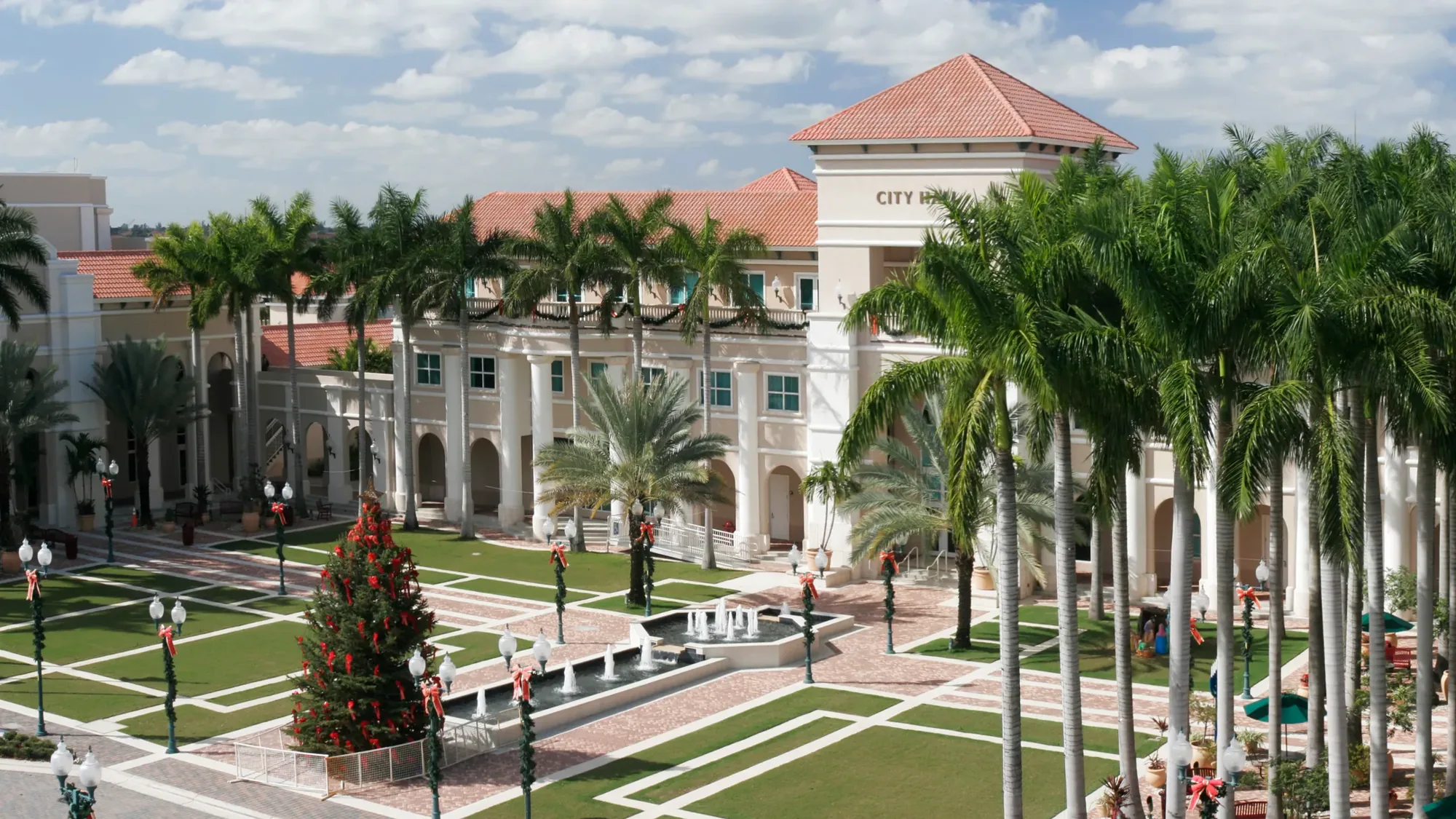
A membrane specification should match the roof that will carry it. Miramar's planning legend identifies commercial and industrial uses and separately marks office-park, employment-center and regional-activity areas. We inspect the deck, insulation, seams, curbs, drains and perimeter before comparing KEE-modified PVC with other systems. KEE refers to ketone ethylene ester used in a PVC formulation; the selected manufacturer's details control installation and repair. For a commercial roof in Miramar, the proposal follows observed field conditions and project requirements.
KEE membranes use thermoplastic seams that are heat-welded, with flashing and terminations selected for the specific assembly. We check for open welds, punctures, surface contamination, movement around equipment, and moisture below the membrane. The repair boundary includes material that can accept a sound tie-in. A PVC membrane option can be compared when the specification and exposure call for it, while a roof inspection documents what is present before materials are priced.
What does KEE change in the membrane?
KEE is a polymer modifier used with PVC. The exact formulation and performance depend on the product, so we use the manufacturer’s published data and project requirements rather than assigning one property to every sheet sold under the category. The owner should compare the specified membrane, thickness, reinforcement, attachment, and flashing components as a complete system. Substituting one sheet without checking the edge and penetration details can leave the roof with mismatched transitions.
We inspect the existing membrane and identify whether it is PVC, KEE-modified PVC, or another assembly before planning repairs. Product labels, repair records, and test cuts can help, but the installed roof still needs field confirmation. The scope should state the selected material and where it ties into existing work. A TPO system uses a different product formulation, though both categories rely on heat-welded seams. The choice depends on the specification, roof condition, and details required at the property.
Where can a KEE roof lose continuity?
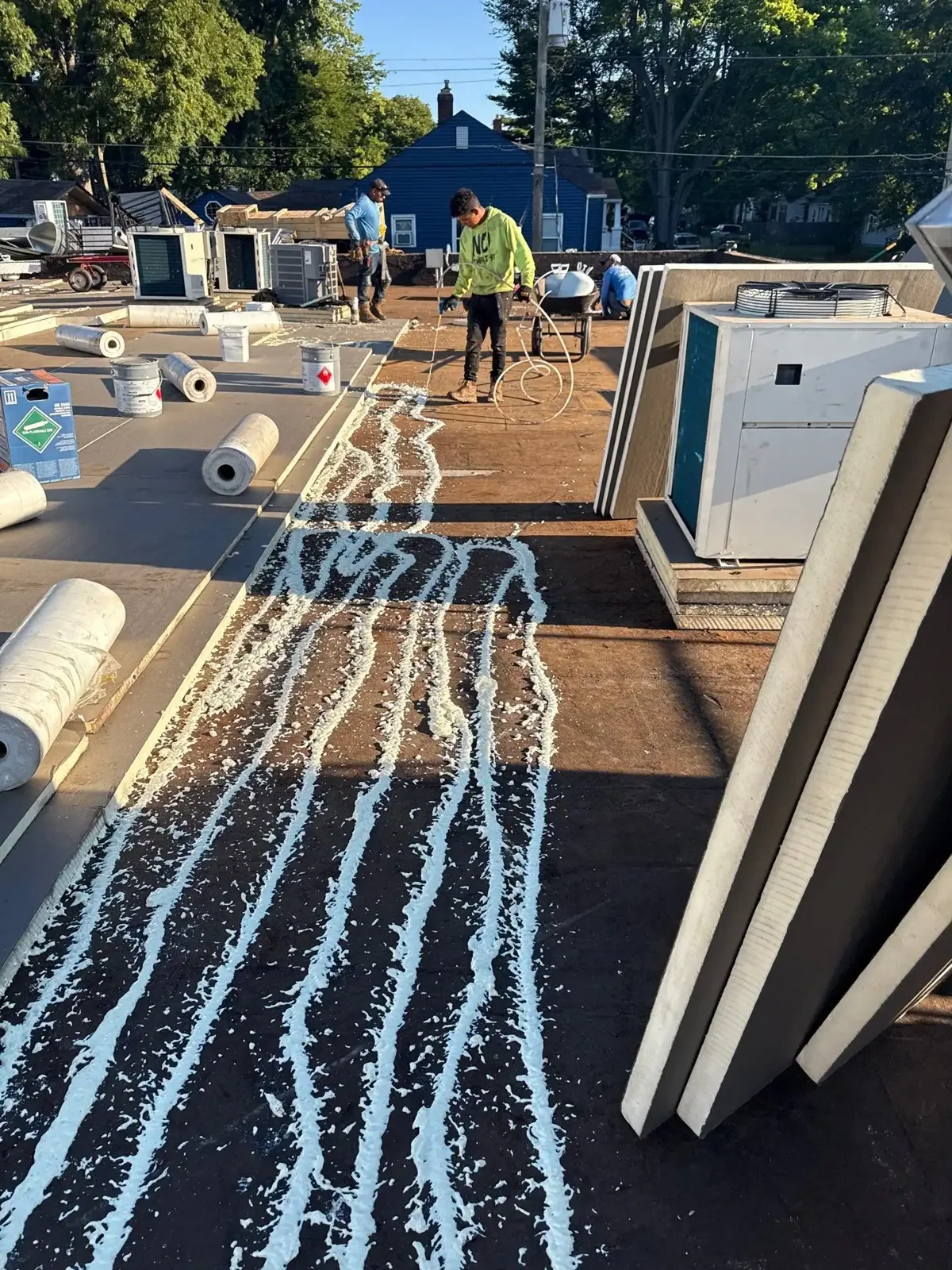
Field seams, corners, patches, and perimeter terminations all need a continuous weld. We look for separated edges, incomplete fusion, wrinkles crossing a seam, and cuts made for later equipment work. The inspector probes questionable areas and records their locations. A repair cannot stop at the visible slit if the surrounding membrane is loose or contaminated. We prepare back to sound material and use a compatible detail that can be checked after installation.
Curbs, vents, and pipe penetrations interrupt the membrane. Flashing height, corner patches, counterflashing, and mechanical clearances affect both water control and future service access. The site contact identifies equipment changes before work starts. An equipment curb review can settle which trade moves a unit and who accepts the opening for permanent flashing. Photos connect each repair to the curb or roof section, giving the owner a record for the next maintenance visit.
How should drains and overflows be reviewed?
South Florida rain puts drainage details on the inspection list. We check bowls, strainers, overflows, scuppers, low areas, and the membrane tie-in around each outlet. Ponding can point to debris, a separated drain detail, or a roof plane that needs further review. We do not treat all standing water as the same defect. The report records its extent and whether a test or opening is needed to determine what sits below the surface.
For a KEE membrane, confirm sheet identity, seams, flashing, attachment and prior repair layers before selecting a compatible detail. After a storm, we inspect the drain path, perimeter, seams, and flashing, then photograph observed conditions. A drainage repair is separated from insulation or slope work unless the inspection connects those scopes. If moisture may extend beyond an outlet, an infrared survey can help target follow-up testing.

Can a KEE membrane be repaired in place?
A repair may be possible when the surrounding sheet remains firmly attached, clean, and dry enough for a compatible weld. We remove loose material, prepare the surface, complete the patch, and inspect the edges. If repeated leaks sit at several seams or the membrane has broad damage, isolated patches may not address the system condition. Wet insulation beneath the sheet also changes the repair boundary. We document what is visible and identify testing before pricing removal.
Cost depends on patch size, surface preparation, flashing, access, equipment conflicts, protection, and concealed moisture. The estimate lists confirmed quantities and assumptions separately. A commercial roof repair includes location photographs and a closeout check of nearby transitions. If the roof does not support reliable local work, we compare recover and replacement options. An infrared moisture review can help define a test area when the membrane surface alone cannot show whether insulation is affected.
More about KEE Roofing
When should the owner compare replacement?
Repeated seam failures, widespread wet insulation, damaged attachment, or failing edges can shift the budget decision toward replacement. We inspect the deck, existing layers, drainage, penetrations, and roof height at terminations. A recover requires acceptable substrate and load capacity, plus room to maintain proper edge and curb details. If those conditions are not present, removal may be needed before a new assembly can be installed.
A KEE replacement scope needs a check of the existing deck, attachment, wind design, and the adopted Florida Building Code. The design professional and building official apply project requirements to the specific work. We coordinate the specified attachment, wind design, and edge details with approved documents. Price and schedule change with tear-off, deck repairs, insulation, sheet metal, unit moves, and delivery access. A replacement scope keeps those drivers visible. The claim documentation process can record observed storm damage without making a coverage decision.
What belongs in the KEE work sequence?
The plan confirms roof access, staging, work hours, drain protection, interior coverage, and the daily limit for opened material. The owner names who approves concealed-condition work. Mechanical trades identify any curb or equipment change before the new membrane is installed. We set a dry-in point for the shift and photograph seams, flashing, and edge conditions before closing each section.
Miramar’s routes include Florida’s Turnpike, I-75, US 441 and State Road 7, with US 27 and other regional roads nearby. The property contact still confirms a delivery path and staging location for the scheduled work. Procurement follows the approved system, thickness, attachment, and transition details. Closeout records installed materials, repair locations, photographs, and maintenance items. Schedule a KEE roof review, and we will verify the assembly, mark the repair boundary, and show which project decisions need to be settled before mobilization.
Commercial Roofing Questions
Is KEE the same material as standard PVC?
KEE is a modifier used in a PVC formulation. Product properties and installation requirements depend on the specified manufacturer and assembly. We verify the product data and project documents before comparing repair or replacement choices.
Can a KEE membrane seam be welded?
Thermoplastic KEE/PVC assemblies use heat-welded seams, but temperature and procedure follow the product instructions. We inspect the existing sheet, prepare sound material, and check the completed seam and flashing transition.
What can make a KEE repair fail again?
A patch can be undermined by loose adjacent sheet, contaminated surfaces, wet insulation, movement at a curb, or unresolved drainage. We inspect the connected roof area so the repair addresses the actual detail and not only the opening.
What do you document after a storm?
We inspect the roof for displaced edges, open seams, punctures and water entry, then document the observed condition before setting a repair quantity. Field observations set the repair scope.
What should be settled before ordering a KEE system?
Confirm the exact product, attachment, insulation, flashing, edge metal, color, and penetrations. The project documents and field measurements should agree before materials are released.
Miramar, Pembroke Pines, Davie, Hollywood, Opa-locka, Miami Gardens, Miami Lakes and Doral in Broward and northern Miami-Dade County.
Request a Roof Assessment
Send the building address and what the roof is doing. We reply with a roof visit date and a written scope.