Restaurant Roofing in Miramar, FL
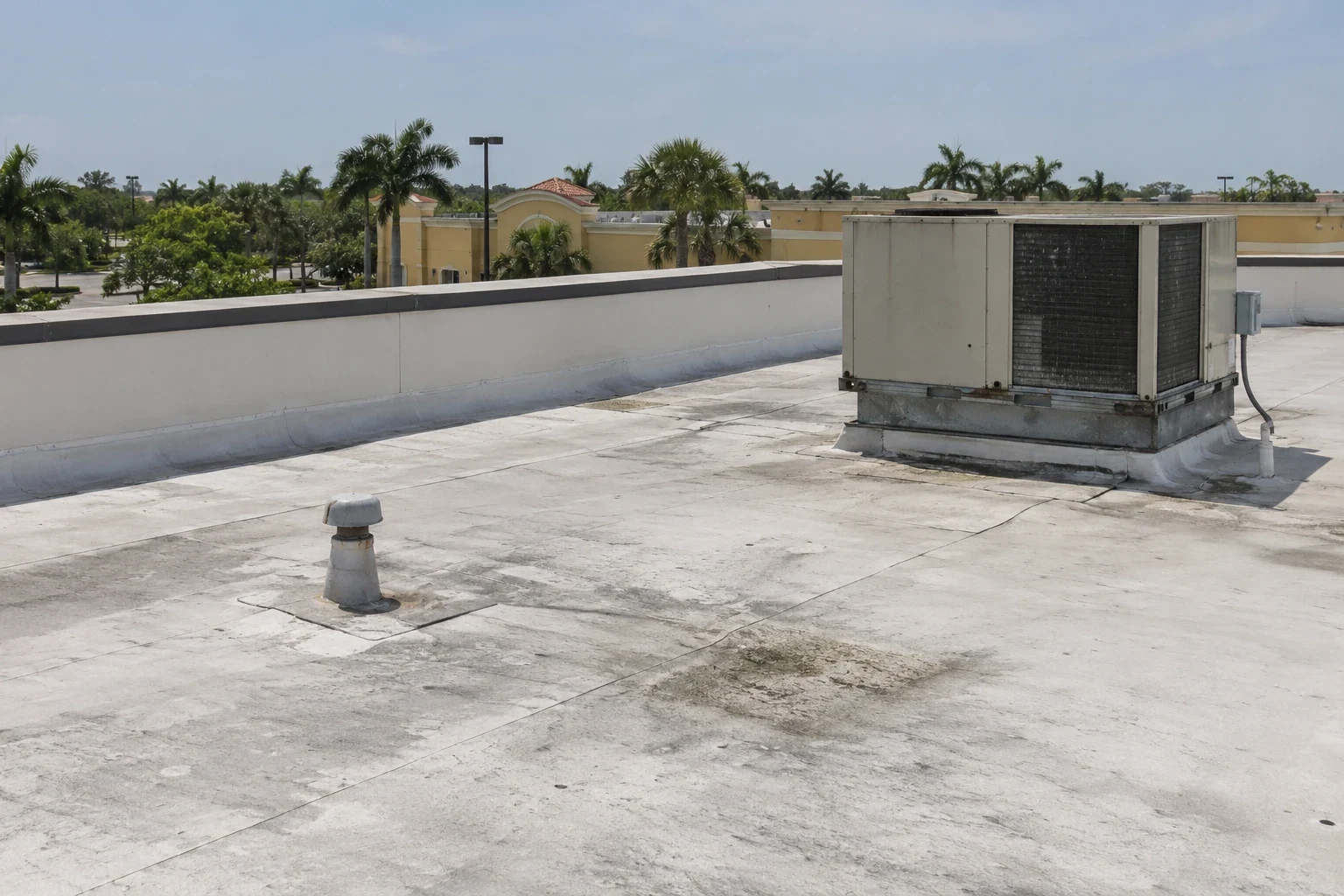
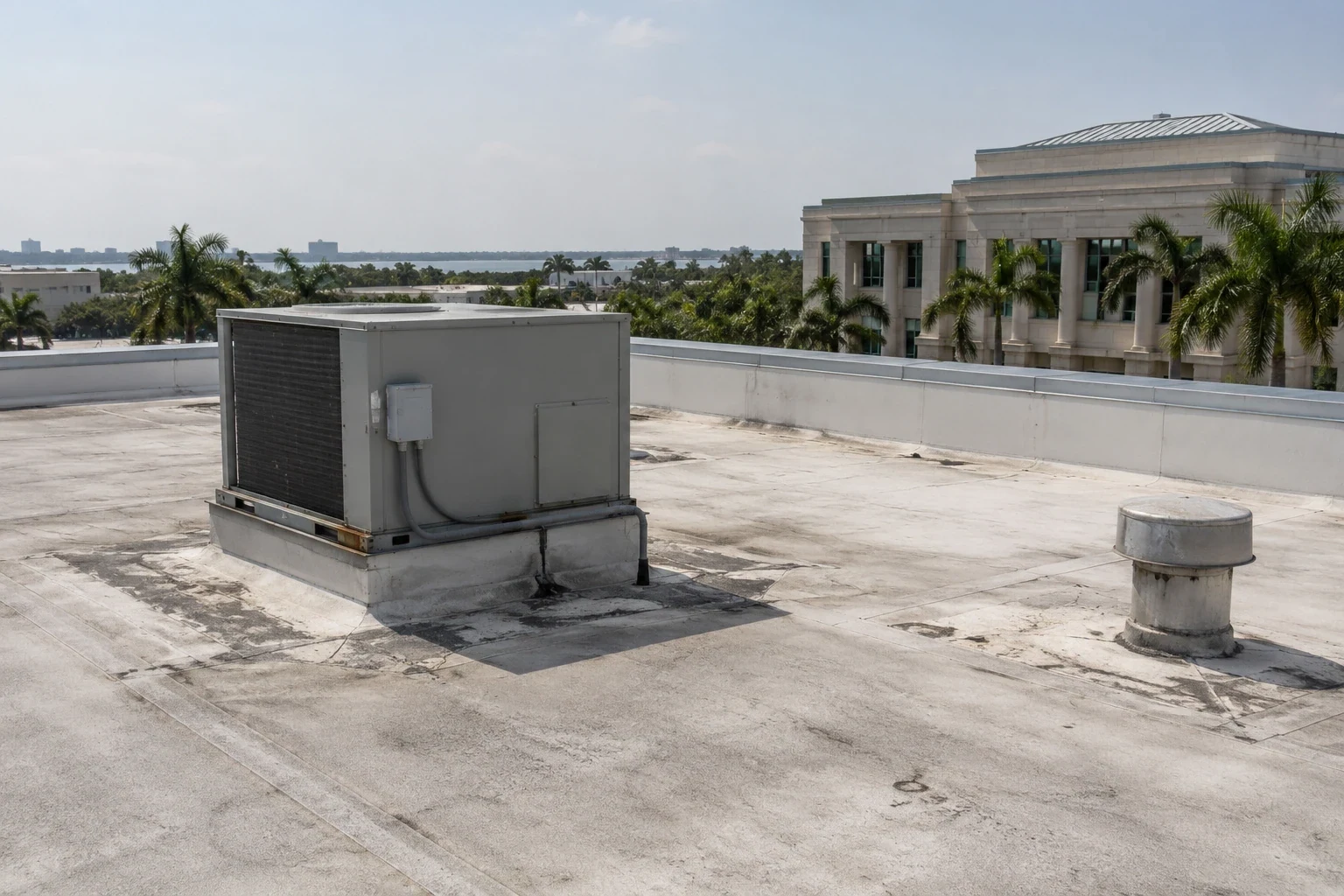
A restaurant roof has exhaust equipment, ductwork, make-up air, drains and service routes above a space that may be preparing meals during the repair. A leak near a hood curb can interrupt the kitchen even when water appears in a dining room. We inspect the flashing, seams, drain path and surrounding membrane, then mark the area that needs repair. Miramar's land-use categories include regional-activity and transit-oriented areas alongside employment-center, office-park, commercial and industrial uses. Commercial development in Pembroke Pines tops ten million square feet, with much of it near Pines Boulevard. We inspect the restaurant's assembly and equipment layout before defining work.
Before work begins, we coordinate roof access, equipment shutdowns, delivery lanes and interior protection with the owner or manager. A Miramar roof review can separate a failed flashing detail from wet insulation or a broader membrane condition. For an active leak, a focused inspection records what is affected before permanent work is priced.
What should be checked around the hood?
Kitchen exhaust, grease duct, fans and support rails create roof penetrations and service traffic. We inspect curb flashing for open corners, split sealant, loose counterflashing and membrane wear from repeated access. The roof may need cleaning or surface preparation before a compatible repair can bond. If a hood, fan or duct must move, the mechanical contractor handles that equipment task while we define the roofing work needed to close the opening properly.
Interior operations matter too. The manager identifies prep areas, cooking lines, dining rooms and inventory that need protection below a roof opening. A lift or material delivery may need to avoid food deliveries and customer access. A grocery roof plan can offer a comparison for coordinating refrigeration and stock, while a shopping center repair plan addresses shared access and nearby tenants when the restaurant occupies a multi-tenant property.
Can a kitchen leak start away from the hood?
Water can move beneath a membrane or along a deck before it appears near the cooking line. We compare the reported area with drains, seams, curbs, parapets and nearby roof transitions. A loose boot or open lap may be the entry point, while a clogged outlet can leave water against a separate weak detail. The inspection records visible conditions and identifies where a test opening is needed to confirm insulation or deck damage.
A restaurant roof visit has to fit the property's own service rhythm. The manager confirms the delivery entrance, roof hatch, kitchen exhaust constraints and hours when a crew may cross a service area; the scope keeps those access limits beside the drain, flashing or membrane work being priced. For a drain issue, we inspect the outlet and nearby flashing together. The drain repair scope should account for the membrane tie-in, protection of the outlet and water flow after the work.
How should storm conditions be documented?
A restaurant roof check includes exhaust curbs, grease-line penetrations, and drain routes, with the work window coordinated around service hours. After a storm, we check edge attachment, rooftop screens, equipment curbs, seams, and drainage, then compare those observations with interior reports. We photograph moved components and open details before temporary work changes the roof surface.
Heavy rain can reveal a drain problem or an open flashing transition; wind can shift edge metal or damage a screen support. We separate observed damage from prior wear and explain whether additional testing is needed. A restaurant contact can mark the dining or prep area below the opening and nearby exhaust equipment. A hurricane roof review documents wind-exposed details alongside the interior work area. The permanent repair follows after access and surface conditions support the selected detail.
When can the kitchen stay open?
Some repairs can be completed above an operating restaurant when access, noise, odor and the area below can be managed. We confirm the work zone, protect sensitive surfaces and limit the roof opening to what can be closed during the shift. If the repair requires a fan shutdown or work above a prep line, the restaurant schedules that window with the equipment trade. We explain which tasks are roofing work and which depend on another contractor.
A focused repair is reasonable when the membrane around the defect is stable, insulation is dry and flashing can tie into sound material. If moisture spreads beyond the visible area, a patch alone may not solve the roof issue. An infrared survey can help select locations for confirmation. A commercial repair scope identifies the membrane preparation, curb work, interior protection and closeout check needed for the approved work window.
More about Restaurant Roofing
What leads to a restaurant reroof?
Repeated leaks at several curbs, widespread wet insulation, unstable attachment or recurring seam failure can justify comparing replacement with another repair. We review roof zones, penetrations, drainage and deck condition, then separate tear-off quantities from concealed work that cannot be confirmed before opening. An overlay belongs in the comparison only after moisture testing, deck review and perimeter measurements show the existing assembly can carry another layer. If those checks do not support it, compare repair and removal instead. The estimate shows what must happen before new membrane work starts.
Restaurants may need a reroof phased around meal service, deliveries, exhaust operations and customer access. We identify the sections that can be worked and dried in each shift. A replacement assessment compares removal with a recover where conditions allow. System choice follows design and project requirements, with application controls and roof access addressed before the work sequence is approved.
What should the owner keep after the repair?
Keep photographs, marked roof locations, repair limits, materials and the date of the visit. Record any fan, curb or drain that required coordination and note whether the area was tested or only visually inspected. That lets the next manager connect a kitchen report with a specific roof detail rather than assume the same condition returned. Follow-up items should remain distinct from work already completed.
A maintenance visit can check drains, grease-exposed details, flashing, seams and service paths before a small defect leads to interior disruption. The owner can share planned equipment work before the roofer arrives, which helps define a safe roof route. Schedule a restaurant roof review in Miramar. We will inspect the roof, coordinate the required work window and clarify whether the next step is a repair, moisture test or replacement comparison.
Commercial Roofing Questions
Can a roof repair happen during restaurant hours?
The roof location, noise, equipment needs and area below determine the workable window. We review the sequence with the manager, protect the kitchen or dining area and limit the open roof section. If a fan must stop or a lift affects a delivery route, the restaurant coordinates that change with its staff and equipment trade.
Does a leak near the hood mean the flashing failed?
The leak location alone does not identify the entry point. We inspect the hood curb, nearby seams, drains and roof transitions, then trace the likely water path. If concealed insulation or deck damage remains uncertain, we identify a test location before setting final repair quantities.
How do you handle an exhaust fan that needs to move?
The equipment contractor handles lifting, electrical isolation and mechanical reconnection. We coordinate the roof opening and flashing work with that trade, then close the membrane detail after the unit is set. The scope identifies access, clearance and who approves any added roofing work found after removal.
What should managers do when water reaches food-preparation space?
Protect the affected area and notify the responsible manager, then record where water is entering and whether roof access is safe. Any temporary measure is scoped against the food-service operation and the roof condition. Permanent work follows after the assembly and repair boundary are clear.
Which items affect a restaurant roof estimate?
Curbs, exhaust equipment, drain details, wet insulation, deck repairs, access, interior protection and equipment shutdowns can change scope and timing. We list confirmed conditions and separate concealed work that requires approval after opening. The owner can then compare an isolated repair with a broader renewal path.
Miramar, Pembroke Pines, Davie, Hollywood, Opa-locka, Miami Gardens, Miami Lakes and Doral in Broward and northern Miami-Dade County.
Request a Roof Assessment
Send the building address and what the roof is doing. We reply with a roof visit date and a written scope.