Grocery Store Roofing in Miramar, FL
Grocery operations depend on refrigeration, receiving and safe customer circulation, so roof findings should connect to the area below. We map leaks against coolers, preparation rooms, electrical equipment and stock, then record drains, curbs and membrane condition. Pembroke Pines has more than eight million square feet of retail development, much of it concentrated along Pines Boulevard. For a Miramar store, its assembly, equipment layout and receiving schedule determine the inspection sequence and repair boundary.
We coordinate roof access, deliveries, equipment clearance and interior protection with the store contact. Store staff should flag refrigeration, food-preparation areas and deliveries when describing the leak and access path. A commercial roof visit in Miramar can establish whether the next step is a local repair, moisture testing or a broader scope. The inspection record connects photographs to roof areas and the affected store use.
What deserves attention near refrigeration?
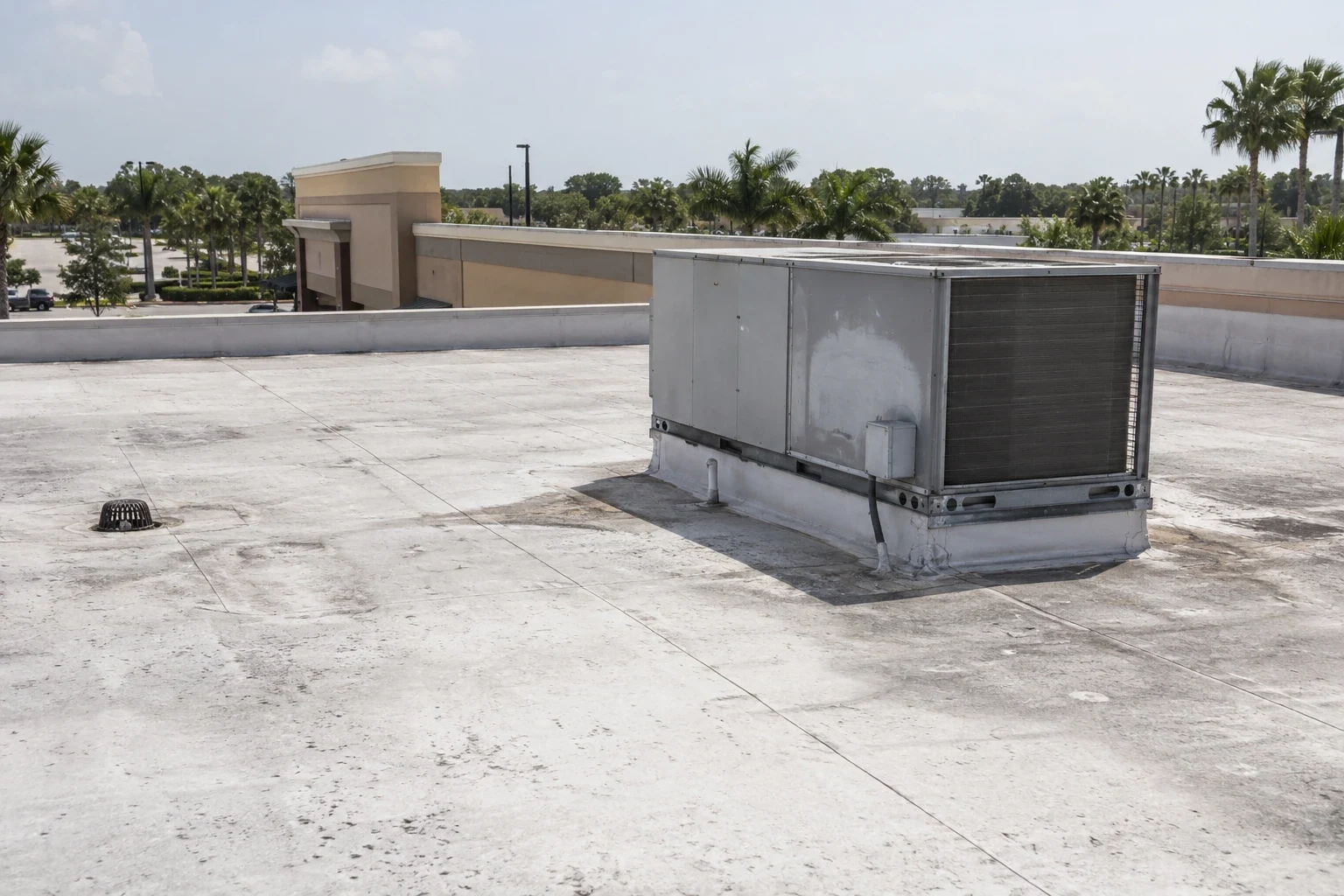
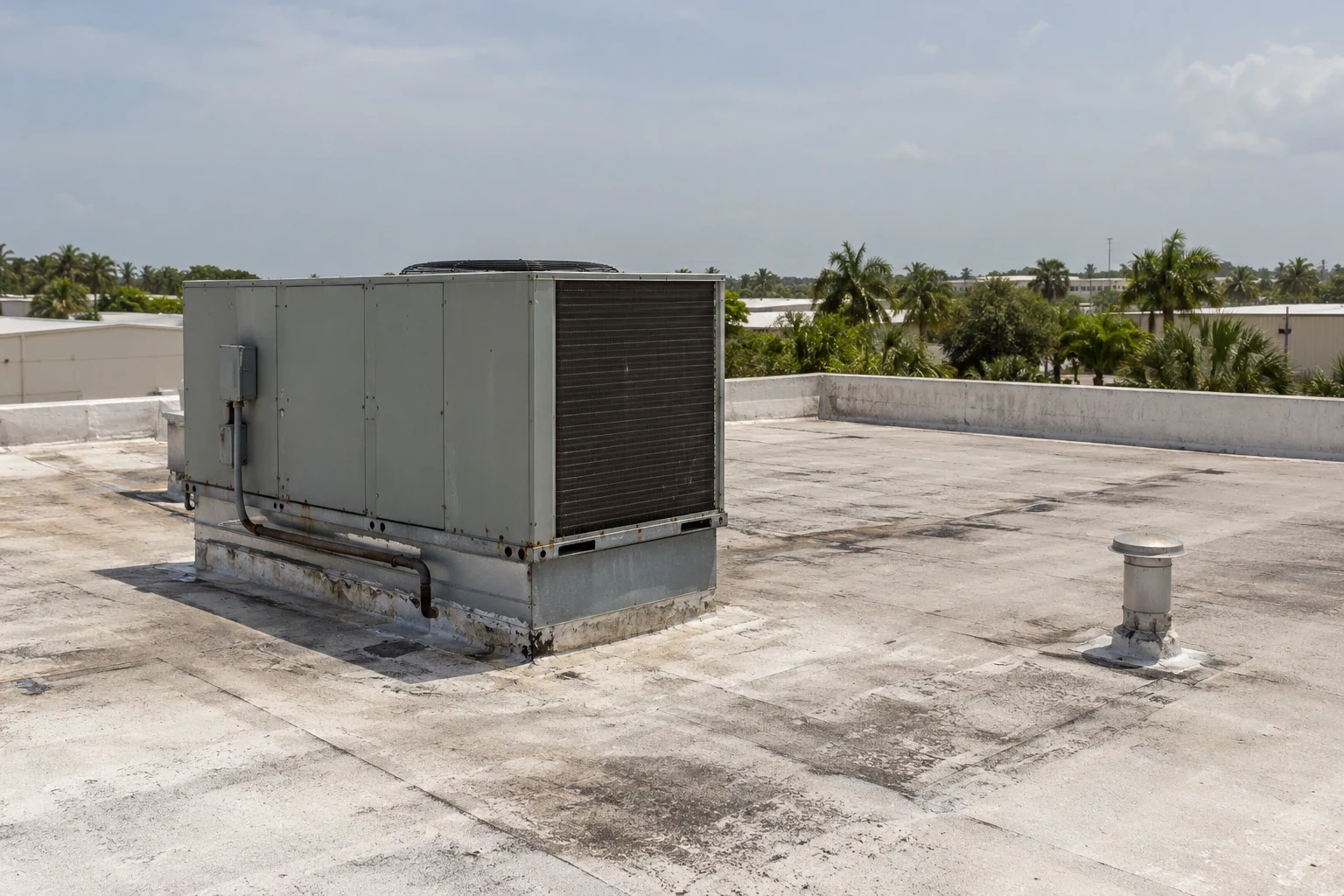
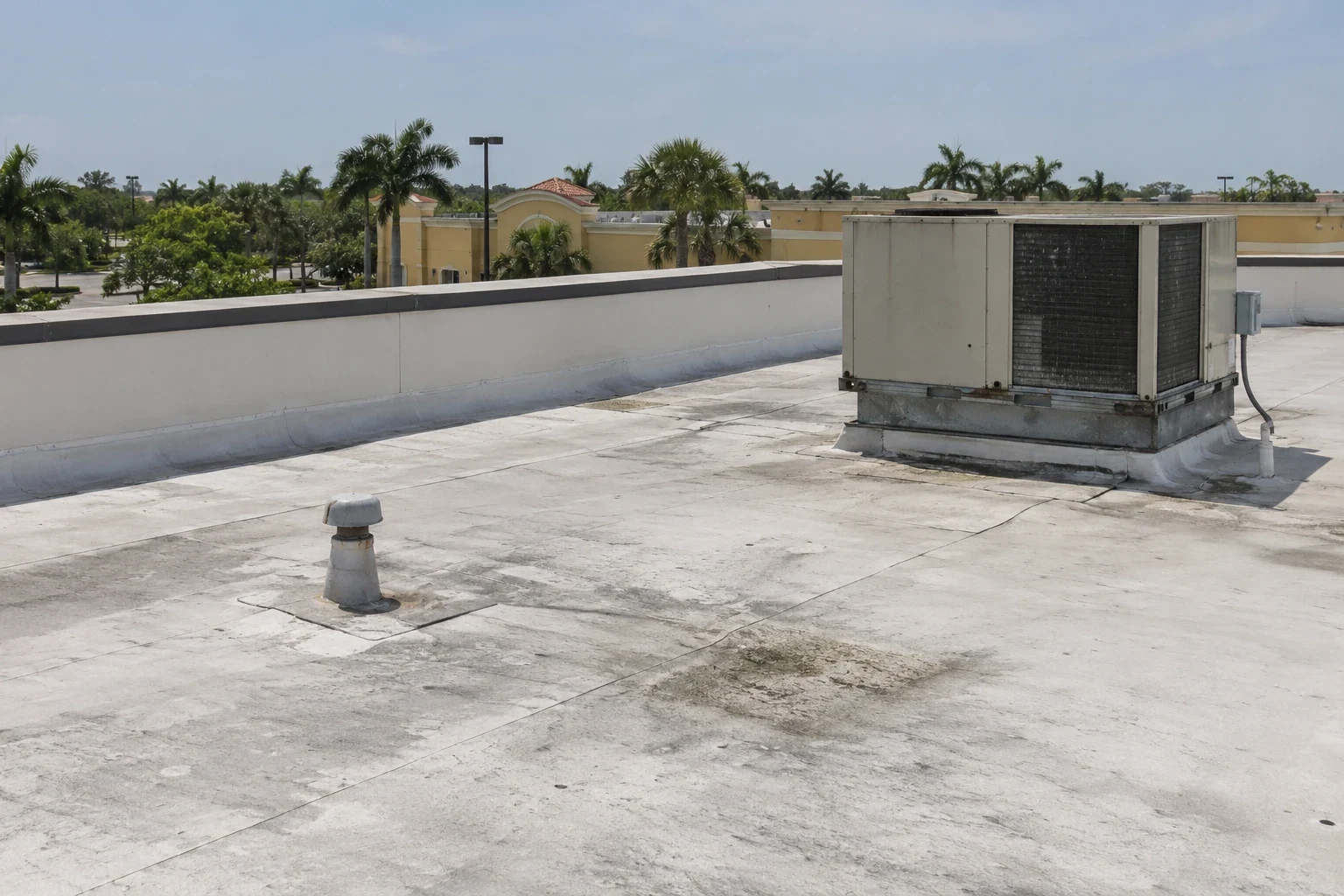
Refrigeration lines, exhaust equipment, curbs and service paths create penetrations and traffic on the roof. We look for open flashing corners, loose terminations, damaged membrane and wear where technicians reach a unit. The roofing scope separates membrane work from refrigeration or electrical tasks assigned to another trade. If a unit must be lifted or isolated, the store coordinates that work with its equipment provider before roofing begins.
Below, refrigeration cases and stock call for a clear protection plan. We identify whether an opening sits above a sensitive area, select a work window and confirm who can move or cover inventory. A large retail roof plan can help compare loading and equipment access with other store formats. A restaurant roof sequence is another useful comparison when exhaust, ventilation and food operations affect the work window.
How can drainage affect food operations?
A slow drain may leave water near a seam, curb or roof opening. We inspect the bowl, strainer, overflow and nearby membrane before deciding whether the issue is blockage, flashing failure or a low plane. Drain work should not send debris into the outlet or leave water sitting against exposed insulation. We protect the drain during repairs and verify the outlet after the work area is closed.
I-75 and the Turnpike provide regional approaches to Miramar, while US 27 and State Road 7 are principal city links. Store management confirms the delivery entrance and refrigeration-area coordination. At a grocery store, we coordinate the receiving and refrigeration areas below the repair, while management identifies the truck entrance and staging location. We keep the receiving area clear when the property requires it and document any temporary access limit. A focused drain repair includes the membrane transition around the outlet, not only the bowl or strainer.
What should be checked after heavy rain?
After heavy rain, ask where water first appeared and whether receiving, a cooler room or an aisle was affected. We check the roof zone above the report, then inspect drains, overflow paths, seams and penetrations that could connect to it. A drain restriction, an open lap and wet insulation call for different work. If the source remains uncertain, identify a test area before expanding the repair quantity.
Keep merchandise and staff routes clear under the affected section while the store contact and roofing crew assign their tasks. The scope records any temporary protection, roof access window and staging point that could affect deliveries. If the check finds displaced attachment or a separate impact point, use a wind and rain roof review to document those roof-side conditions before permanent work is priced. We then tie each repair line to the observed detail rather than treating the whole store as one leak zone.
Can the repair stay over one aisle?
A repair may stay local when the membrane is secure around the failure, nearby insulation is dry and the flashing can tie into sound material. We set the repair boundary, prepare the surface and confirm the finished seam or patch. If moisture extends beyond the opening or similar failures appear near several curbs, the roof area may need more than another surface patch. We show the test or removal needed to confirm that broader condition.
An infrared survey can help select areas for confirmation when visual signs do not reveal the insulation condition. Test openings verify whether material is wet before removal quantities are set. A roof moisture survey can support that decision, and a repair scope lists the affected aisle or work zone, interior protection, access and closeout checks. That gives the store contact a practical plan for operating around the work.
More about Grocery Store Roofing
What changes a grocery reroof sequence?
Broad wet insulation, repeated seam failure, unstable attachment or deck concerns may move the work from isolated repair to replacement. We compare roof zones, drainage and equipment density, then identify what tear-off, insulation replacement, curb work and edge metal will require. A recover is considered only when the existing roof, moisture condition, deck and perimeter height support another assembly. Concealed conditions are documented for approval after opening.
Refrigeration and delivery schedules can limit when a roof zone is opened or a lift is staged. We plan daily tie-ins and dry-in points, identify protected areas below and coordinate equipment movement with the store's trades. A replacement assessment compares recover and tear-off paths. A PVC system review can address assembly choices where the project requirements and building conditions support that option. Cost drivers include insulation, deck repairs, equipment clearance, drains and access.
How should the store track roof work?
Save roof plans marked with repairs, photographs, test locations and the date each area was reviewed. Note whether the work was above stock, a cooler, a receiving route or another sensitive space. A future manager can connect an interior report with the relevant roof detail and confirm whether the earlier repair boundary remains sound. Keep maintenance items separate from completed corrective work.
Scheduled visits can check drains, flashing, seams and equipment traffic before another report interrupts operations. The store team can share recurring water locations and delivery limits before inspection. A roof condition report gives ownership a record for repair planning across its retail properties. Schedule a grocery roof review in Miramar. We will inspect the assembly, coordinate access and identify the repair, test or replacement decision that protects the operating area.
Commercial Roofing Questions
How do you protect refrigerated inventory during a roof repair?
We identify the work zone above the affected cases or stock, then agree on covering, relocation or restricted access with store management. The roof opening remains limited to the area that can be secured that shift. If active water is present, temporary protection comes first while the permanent repair boundary is confirmed.
Can refrigeration equipment stay running?
The equipment trade and store contact tell us whether a unit can remain active or needs a planned shutdown. We identify curb flashing, service clearance and roof access needs before work starts. The roofing scope records the coordination so an equipment change does not leave the membrane open.
What if water is standing near a roof drain?
We inspect the drain, overflow route, strainer, flashing and nearby membrane. A blockage differs from a failed tie-in or a low roof plane. We protect the outlet during work and verify drainage after the repair, with testing or an opening added only when concealed conditions need confirmation.
Will a storm require replacing the whole grocery roof?
A storm warning alone cannot tell whether a particular store needs replacement. We document attachment movement, punctures, open seams, drainage and interior water, then set a repair boundary. Localized damage may be repaired; broader wet insulation or repeated failures can support a replacement comparison.
What drives the schedule for a grocery store reroof?
Store hours, delivery windows, refrigeration work, roof access, material lead time, weather and the number of daily tie-ins all affect sequence. We map the roof zones and set a dry-in point for each shift. Equipment movement and concealed deck conditions are handled through agreed approval steps.

Miramar, Pembroke Pines, Davie, Hollywood, Opa-locka, Miami Gardens, Miami Lakes and Doral in Broward and northern Miami-Dade County.
Request a Roof Assessment
Send the building address and what the roof is doing. We reply with a roof visit date and a written scope.