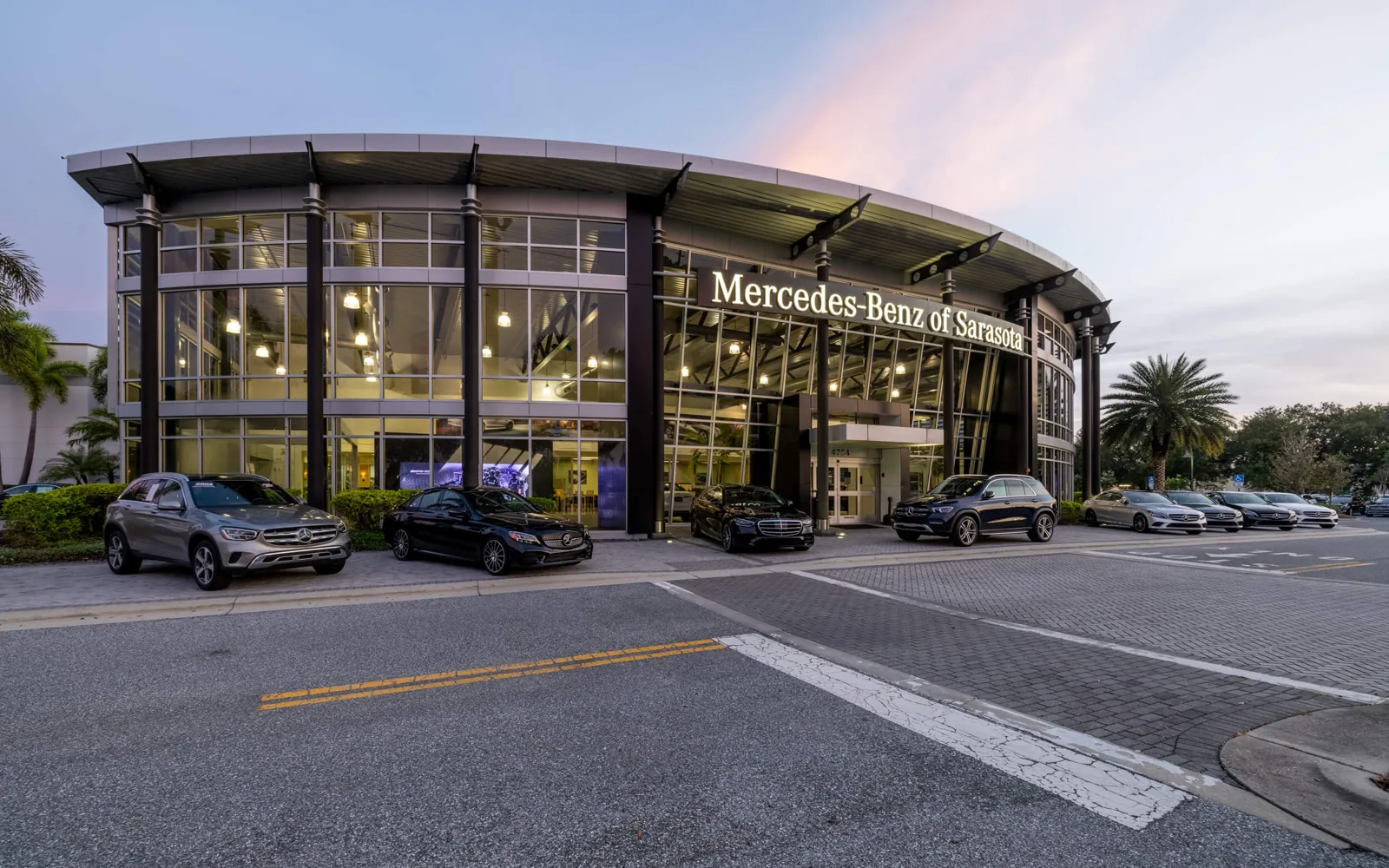
Auto Dealership Roofing in Miramar, FL
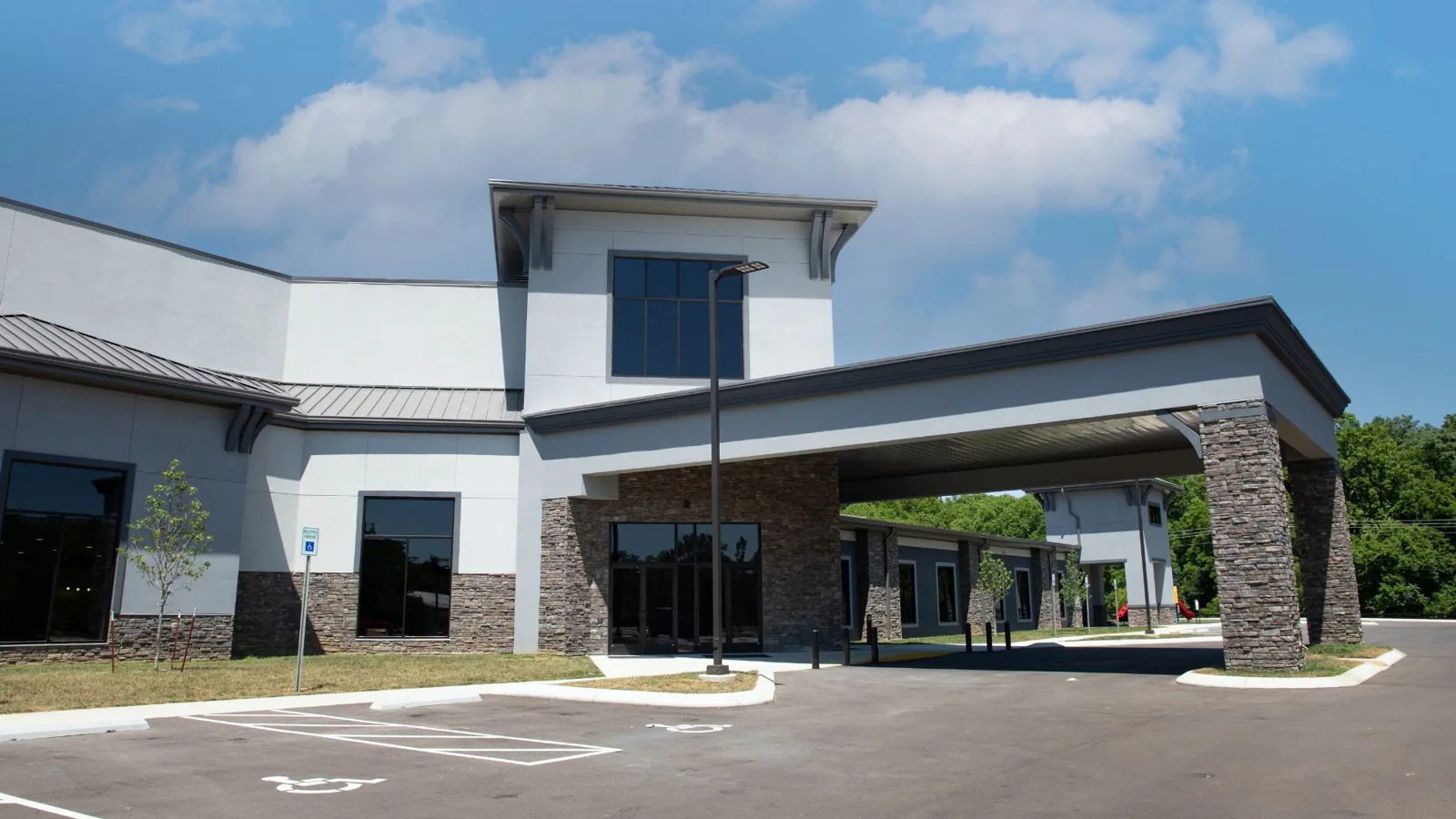
A dealership roof may cover a bright showroom, service bays, parts storage, and customer parking under one connected assembly. A leak at a roof curb can affect the floor below before it reaches the visible stain. Miramar's land-use legend marks employment, office-park and transit-oriented areas alongside commercial and industrial uses. We inspect seams, drains, curbs, flashing, and edge metal, then relate each finding to the building use beneath it. At a dealership in the Miramar service area, the owner confirms customer routes and service hours.
We begin with the reported water entry and the roof plan. A commercial roof inspection checks the assembly, records visible defects, and identifies where testing could change the repair quantity. Mark the showroom or service bay below the leak and coordinate vehicle movement under the site safety plan. We first limit exposure and protect the work area, then set a permanent repair boundary from the roof condition and the dealership’s operating schedule.
How do customer and service routes affect roof work?
A crane, lift, dumpster, or delivery truck can compete with test drives, vehicle drop-off, parts deliveries, and pedestrian paths. The property contact identifies the entrances that must remain available and any times when service traffic peaks. We map equipment staging before mobilization and keep the daily roof opening within a limit that can be secured before close of shift. A phased occupied-building sequence can separate noisy removal from installation and closeout.
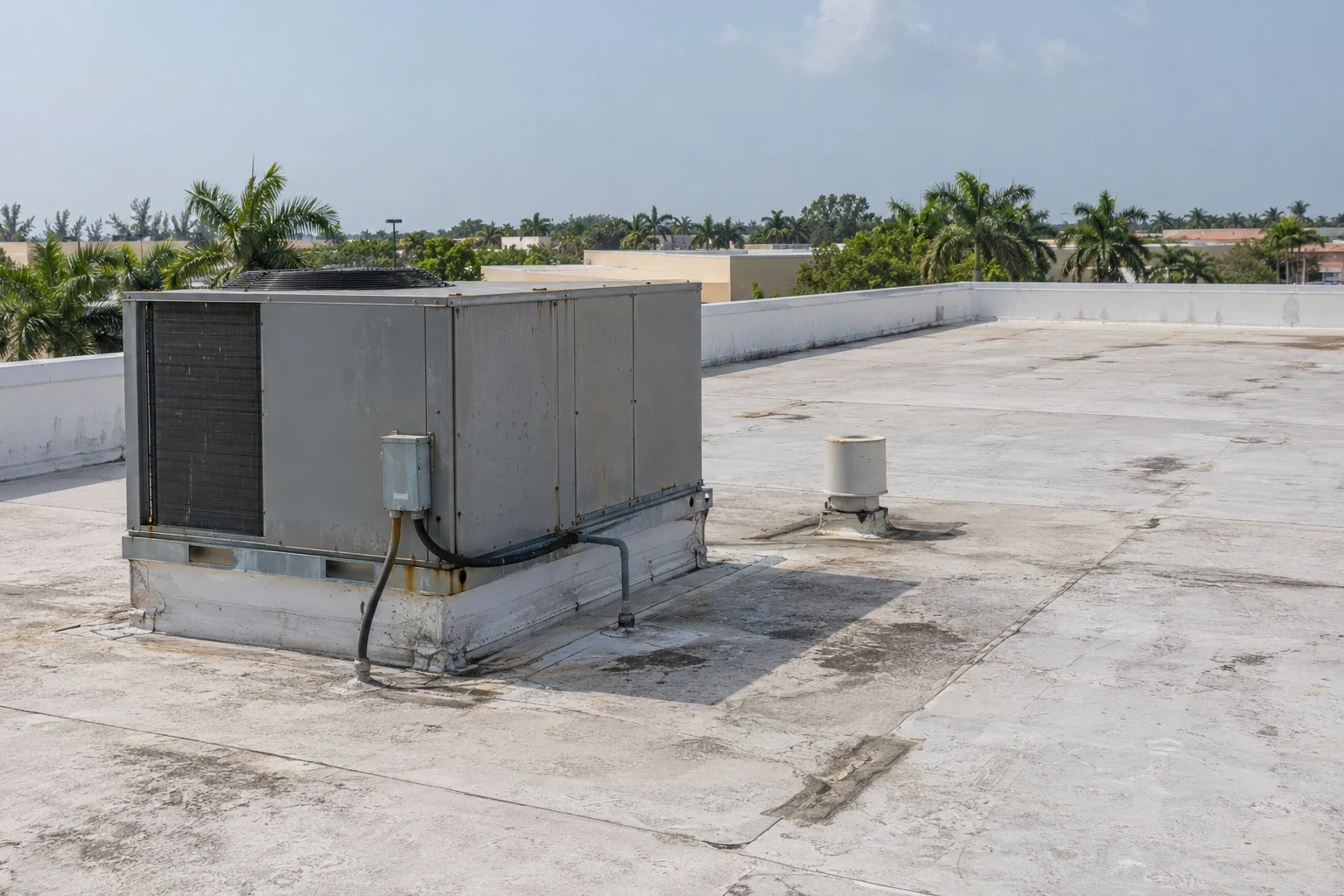
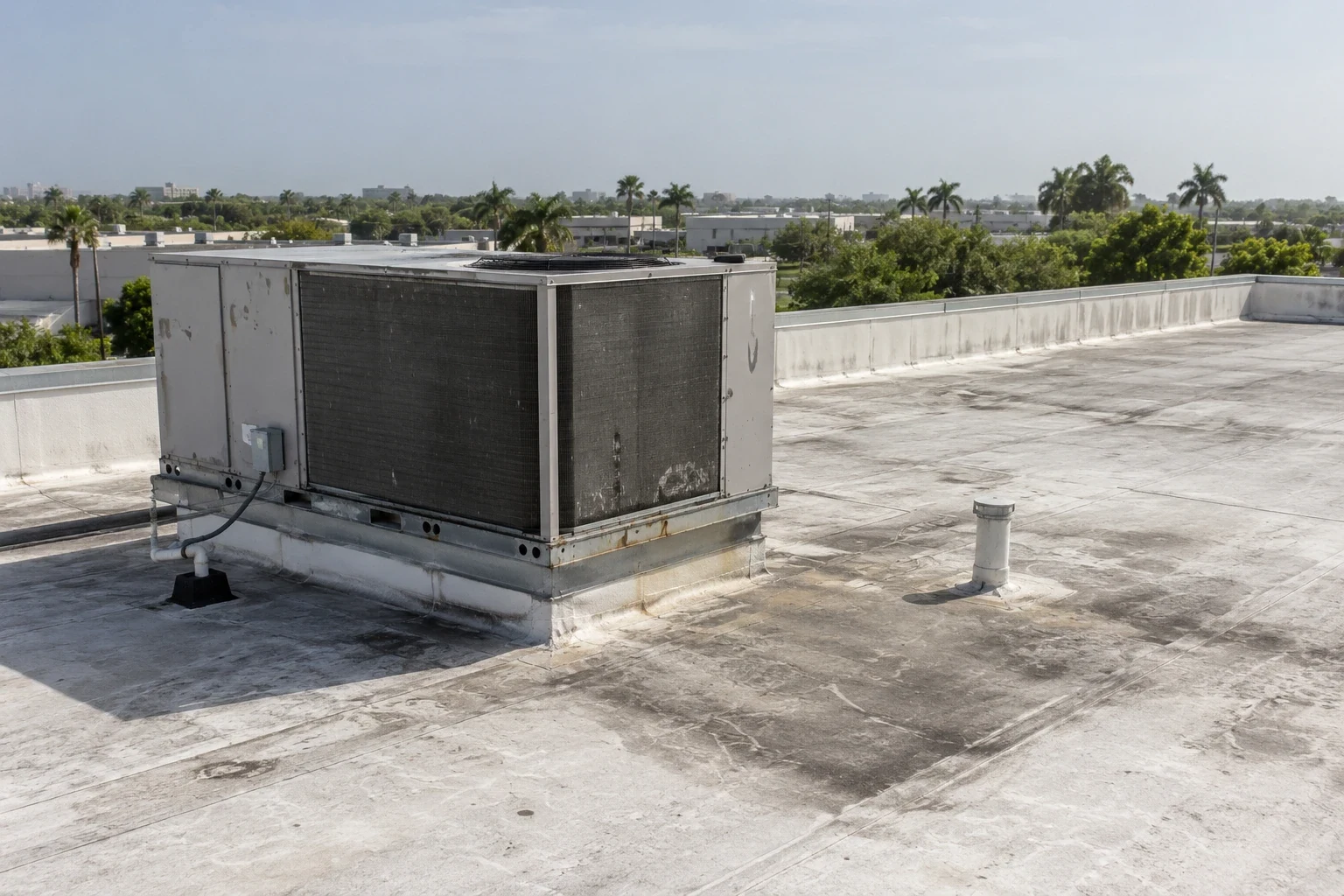
Roof access also crosses equipment and exhaust locations. We check clearances around HVAC units, shop exhausts, signs, skylights, and service platforms. If another trade needs to move a unit or add a penetration, that work is coordinated before the membrane is closed. We photograph flashing and equipment details so the owner can see which condition is complete and which requires a separate decision. Service advisors can then direct vehicles away from the active staging lane without changing the roof scope.
Facility records help tie an interior report to the right area. A sales office, parts room, and service bay may have different ceiling construction and operating hours. We note the reported room, compare it with the roof path, and avoid treating every interior mark as a separate leak. The manager receives a short location record and a repair boundary that can be used to plan access with staff.
Where do leaks gather around bays and equipment?
Roof drains, scuppers, equipment curbs, skylights, and perimeter walls interrupt the membrane. We inspect each tie-in for loose flashing, open seams, clogged strainers, displaced edge metal, and evidence of prior patches. Water may travel across insulation before appearing over a service bay or showroom. If the path is uncertain, we recommend testing before expanding the repair. A drain and scupper review separates outlet work from membrane repair.
A sales floor, service bay, and vehicle canopy can meet at different roof transitions, so we document the assembly and likely water path before setting an access sequence. Drainage outlets require their own review because a clogged strainer, failed flashing tie-in, and open membrane seam call for different corrective work. For wind or rain reports, photographs, seam checks, and interior records help distinguish observed damage from ordinary wear. The service manager confirms where a lift can stage and which customer routes must stay open. We then explain whether the condition calls for a focused repair, moisture testing, or a broader review.
Pembroke Pines concentrates much of its commercial activity along Pines Boulevard, while northwest industrial properties connect with US 27 and I-75; a dealership roof plan still coordinates customer lanes, service bays and the property’s delivery gate. We confirm the dealership's roof system and coordinate work with the owner's service calendar. A nearby flex and industrial roof review may involve different operating routes, yet the inspection method still begins with the actual roof.
What should be checked after a wind event?
After strong wind or rain, we inspect perimeter attachment, corners, seams, penetrations, and exposed flashing. We coordinate deliveries and lot circulation with the site contact so lifts and materials do not block customer or service traffic. We record current movement, punctures, and water entry before temporary protection alters the surface. A wind damage inspection connects observed defects to roof locations and separates new work from older wear where the evidence supports that distinction.
Showroom glazing, service equipment, and roof penetrations can make a leak report difficult to trace. We compare interior marks with the roof plan and check whether water is entering at a seam, curb, drain, or edge. Confirm door clearance, customer routes and the roof detail involved before setting the work boundary. The owner receives the temporary measure and the next action in the same record.
Weather also affects timing. We keep the open work area within the daily limit, monitor the surface, and close it at the agreed dry-in boundary. If a storm interrupts the sequence, the field lead documents what remains temporary. The property manager can keep vehicles and customers clear of the active work zone while the roof stays protected.
When does a repair give way to replacement?
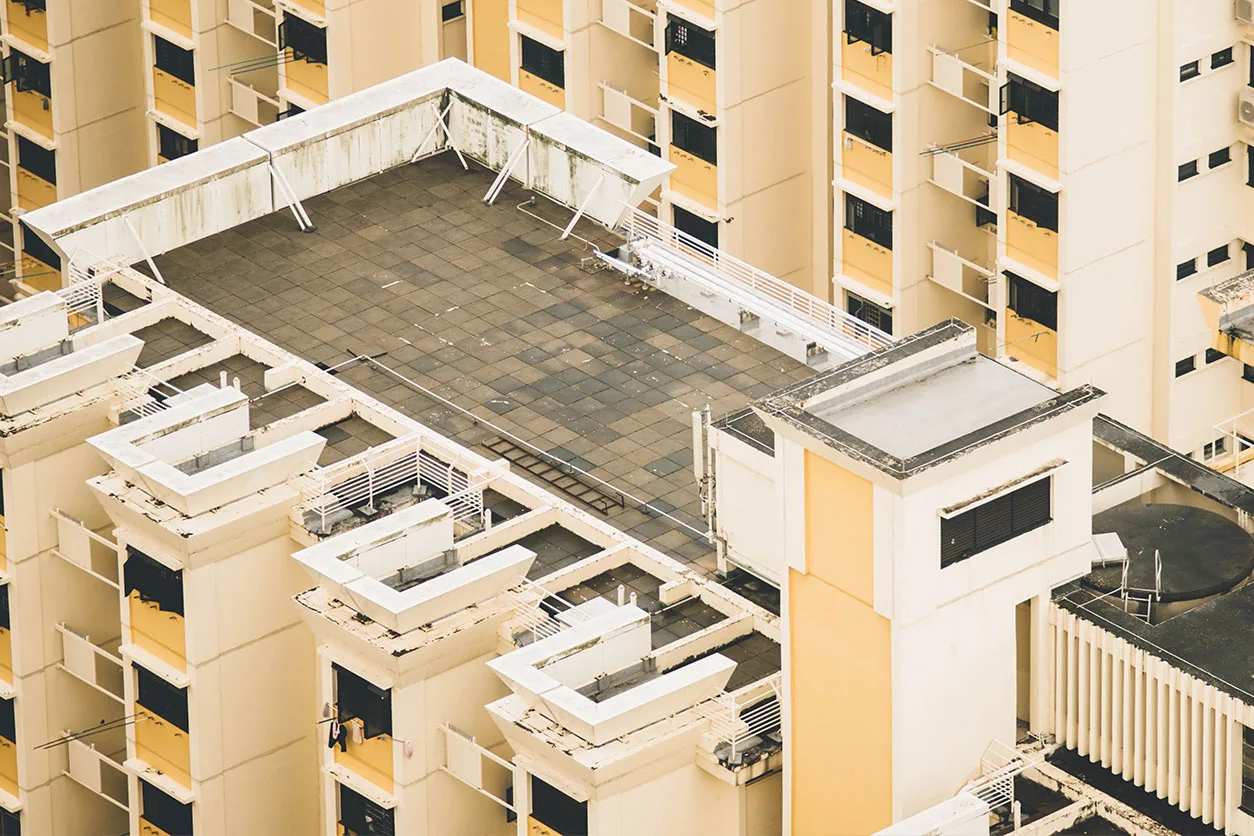
A local repair may fit when the surrounding membrane is attached, the substrate is sound, and the leak has a clear boundary. Repeated seam failure, several wet areas, loose perimeter attachment, or deck damage can support a broader scope. We check existing layers, insulation, slope, flashing, and edge height before comparing a recover with tear-off. A surface coating cannot dry insulation or correct a failed drain tie-in.
Cost changes with tear-off depth, insulation, deck repairs, edge metal, drains, equipment moves, disposal, access, and customer protection. Timing changes with procurement, work windows, vehicle circulation, and weather. We separate confirmed items from conditions concealed under the membrane. A replacement review records those drivers so the owner can compare a focused repair with a larger capital step.
Similar large buildings in Pembroke Pines include different commercial forms, from office to industrial areas. A warehouse roof comparison can clarify how equipment routes and long roof areas change planning, but it does not decide what a dealership needs. That recommendation follows the measured assembly and the owner’s project documents. After work, a maintenance program tracks drains, seams, and penetrations before another leak report reaches the showroom.
More about Auto Dealership Roofing
What should the service manager receive?
Closeout records the repaired area, installed materials, photographs, approved changes, and any follow-up condition. We mark the roof plan so the service manager can compare a later ceiling report with the completed work. If another trade must cross the roof, the record shows which surfaces and flashing details need protection. Temporary covers and permanent repairs appear as separate items.
That file can also support a future replacement decision. It shows how the roof has changed, which drains or seams recur, and where additional testing could be useful. Schedule a Miramar dealership roof review. We will inspect the assembly, map the water path, and set a work sequence around service traffic, customer access, and the repair boundary.
Commercial Roofing Questions
Can the service department remain open during a roof repair?
We can phase work around customer and vehicle routes the owner identifies. The daily opening limit, staging area, and dry-in point are set before mobilization. A concealed condition or weather change may require an approved adjustment.
Why might water show up over a different department?
Water can move along a deck, insulation joint, or roof transition before reaching the interior. We compare the reported location with seams, curbs, and drains, then test if the entry path remains uncertain.
Does a wind event require a full roof replacement?
No. We inspect attachment, flashing, seams, drains, and interior signs. A contained defect may need repair; widespread moisture or repeated movement can justify a broader comparison.
What roof areas need attention around service equipment?
We check curbs, exhausts, penetrations, flashing, and clearances where equipment work can affect the membrane. The owner identifies units or signs scheduled for service before roof work closes those details.
What should be in the repair closeout?
The record should show the roof location, photographs, materials, approved changes, temporary protection removed, and remaining follow-up. The service manager can use that information when another trade needs access.
Miramar, Pembroke Pines, Davie, Hollywood, Opa-locka, Miami Gardens, Miami Lakes and Doral in Broward and northern Miami-Dade County.
Request a Roof Assessment
Send the building address and what the roof is doing. We reply with a roof visit date and a written scope.