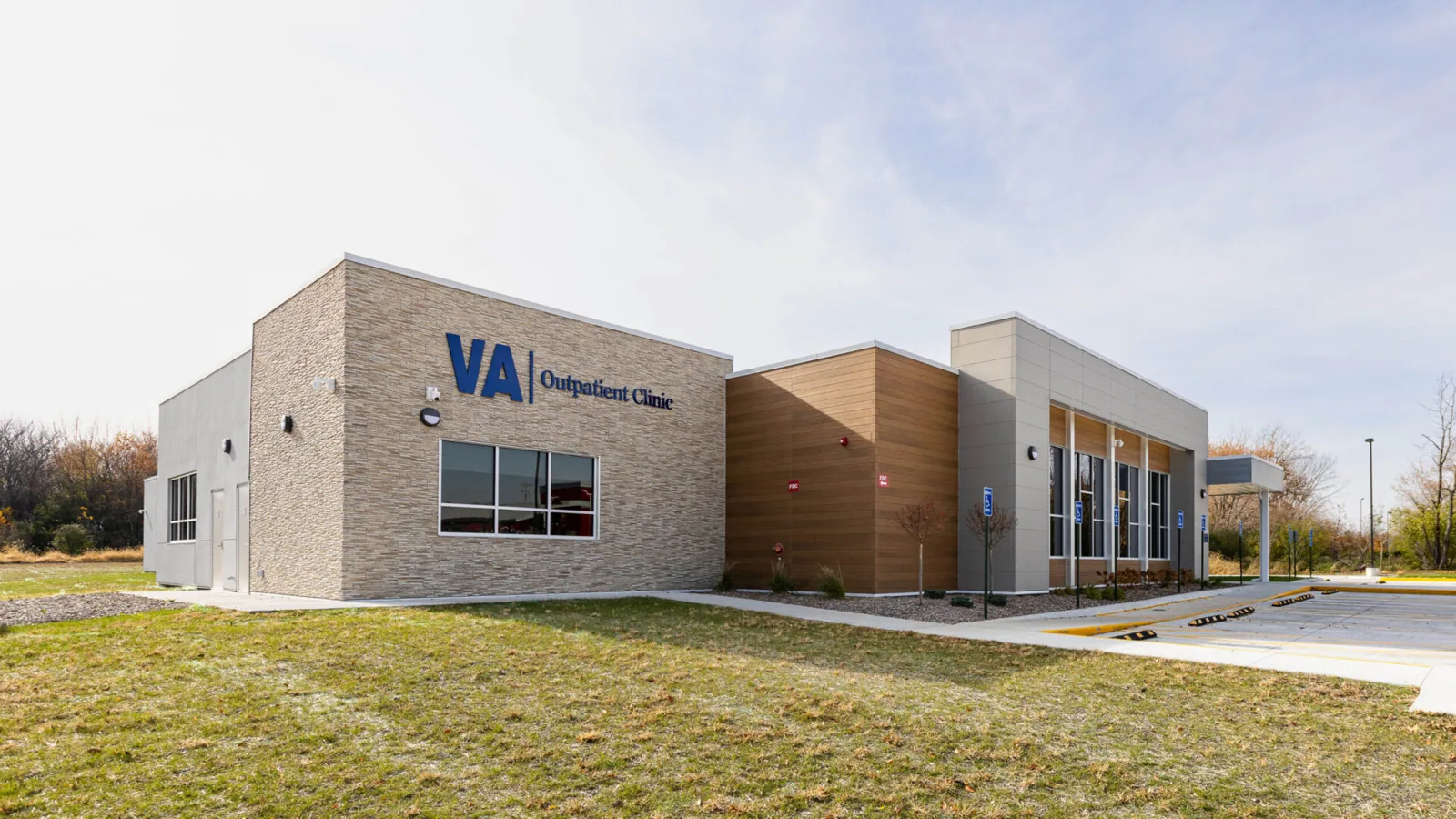
Commercial Roofing for Medical Offices in Miramar
A leak above a waiting room, exam area or records space needs a careful response. The indoor symptom may be small, but the roof path can involve a nearby seam, curb, flashing detail or drain. For medical office buildings in Miramar, we begin by documenting the report and the operating constraints, then inspect accessible roof areas before recommending repair or broader work.
We ask the facility contact where water appeared, when it was noticed, whether it returned and which spaces or access routes need special coordination. On the roof, we review the assembly that is present rather than guessing from the building's use. The inspection can include seams, penetrations, edge details, drainage and rooftop equipment interfaces. A commercial roof inspection helps establish what was visible and what requires another diagnostic step.
The goal is a scope the property owner and clinic manager can understand. It should distinguish observed conditions from assumptions, identify the proposed work area and explain how access will be coordinated. If a medical-office roof shares a larger property portfolio, the same clear record can help compare needs across buildings without treating every roof as identical.
Follow the report back to the roof
Interior stains do not reliably mark the exact opening above them. Water may move along a deck or insulation layer before reaching a ceiling, and wind-driven rain can make a leak appear only under certain conditions. We use the reported room, timing and any available photos as clues, then examine relevant roof transitions around that location.
At a curb or penetration, we check the flashing and nearby membrane. Around drains and scuppers, we look for visible debris, water paths and conditions at the surrounding roof surface. At walls, edges and changes in elevation, we review transitions that may admit water. When the evidence supports a focused repair, a leak repair scope should name its limits and any adjacent condition that remains for monitoring.
Some roofs call for additional investigation before the repair boundary can be set. We can discuss a moisture survey when the assembly and conditions make it suitable. Set the survey method, limits, and included areas before work so the result answers a defined property question.
Coordinate work with patient access
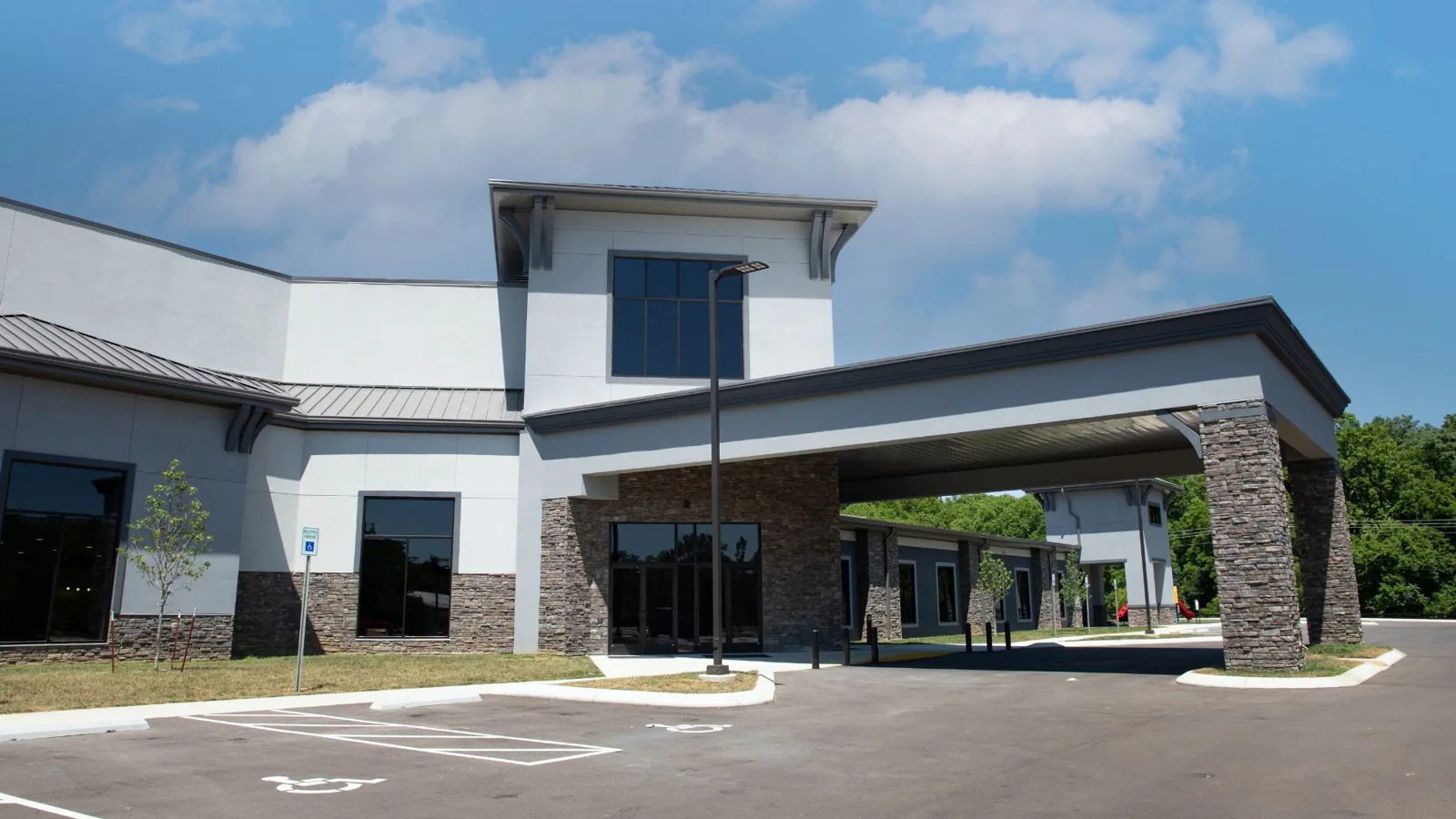
Medical offices often need predictable entrances, clear paths for patients and staff, and communication with the person managing the building. Before roof work, we review the site's access process, acceptable work windows, restricted areas, delivery rules and contact for day-of coordination. The owner or manager can identify sensitive areas and tell us when a proposed sequence would conflict with scheduled activity.
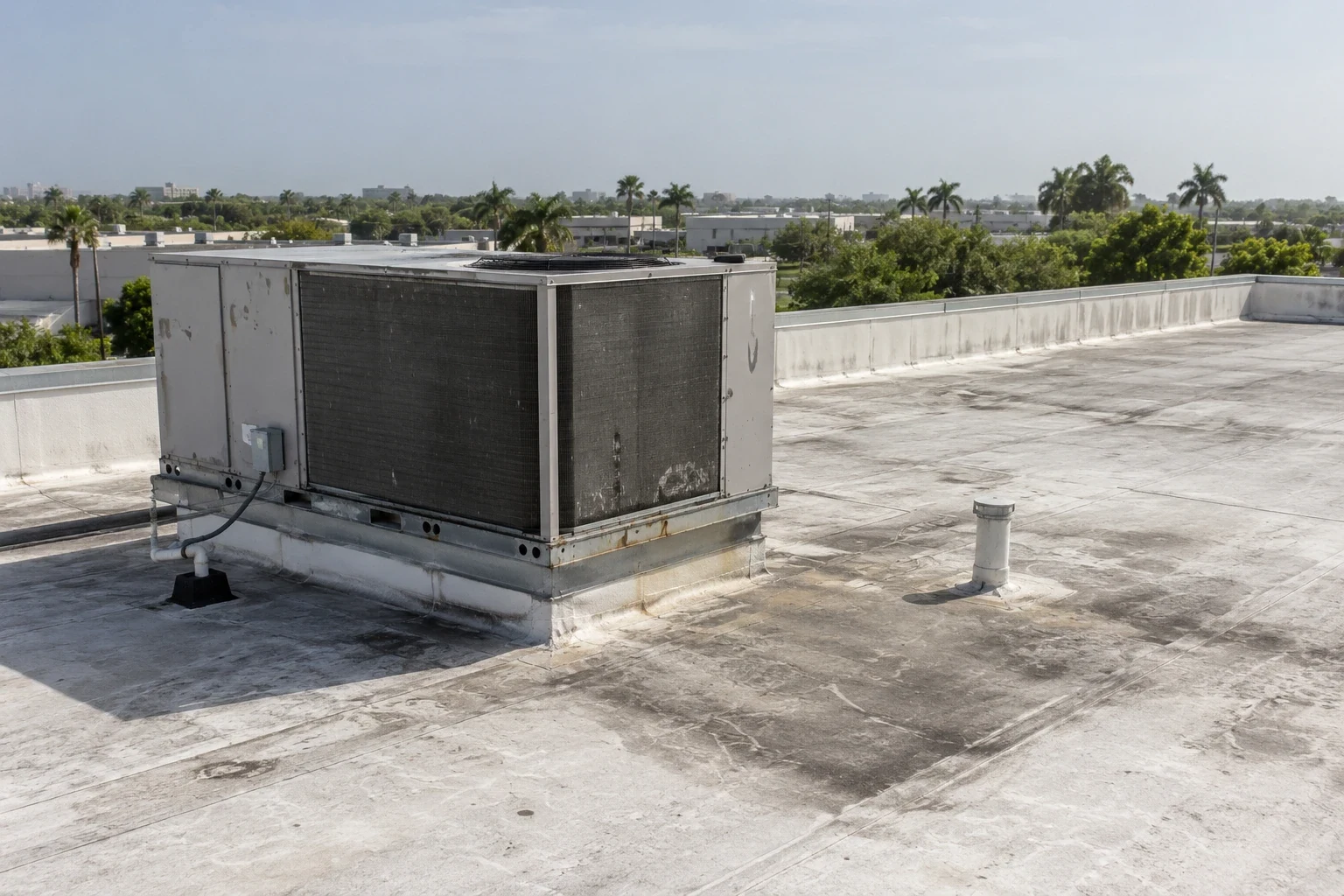
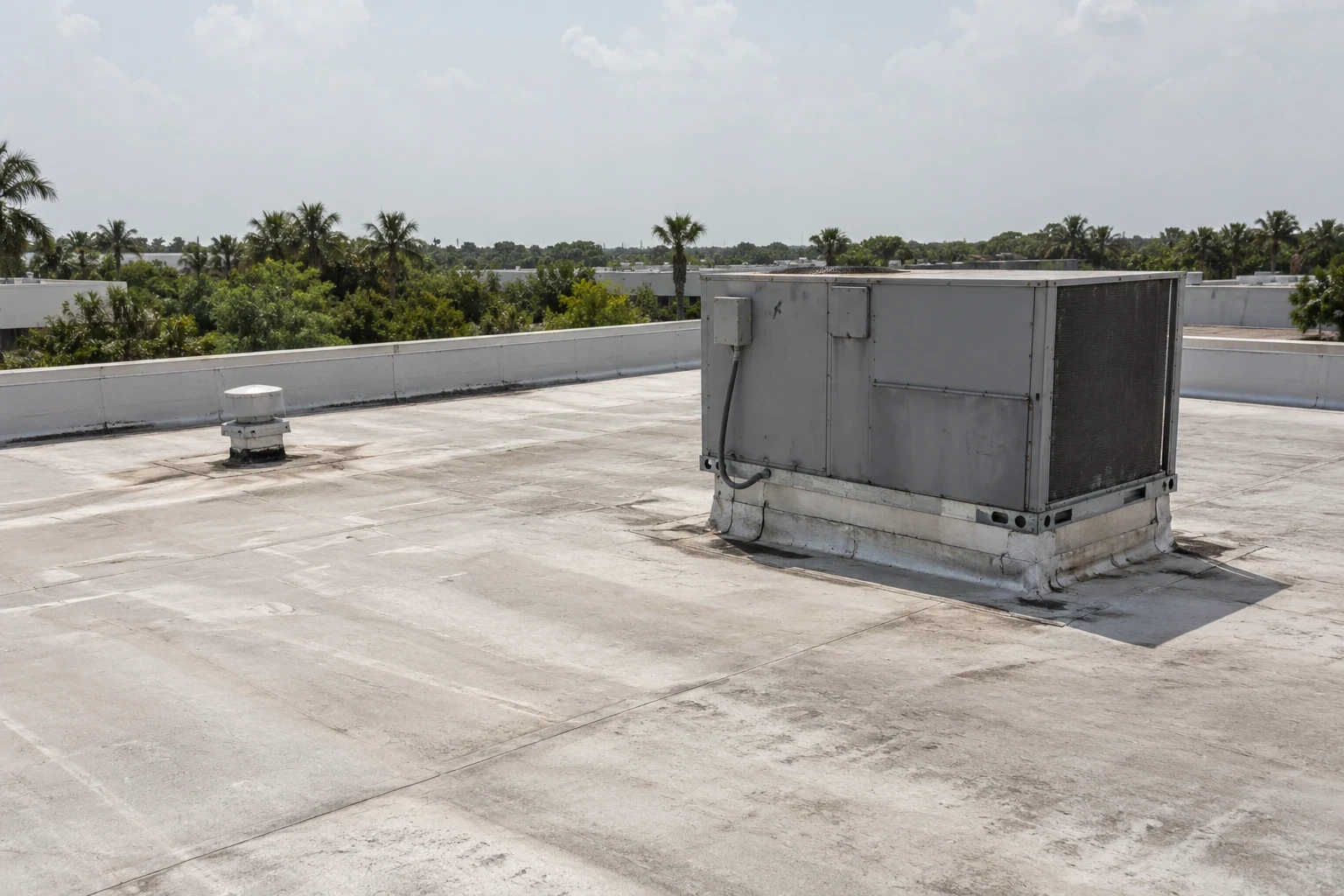
Rooftop equipment adds another coordination layer. HVAC units, exhaust equipment, conduit and supports may need service access while roofing work is underway. The roofing scope should define which details are included and where mechanical or electrical work belongs with another contractor. Our curb and support review can make those interfaces explicit, including where flashing work meets equipment responsibility.
For a larger project, work may be divided into roof sections that fit access and operational needs. The sequence should explain where crews will work, what movement may be restricted, and how the property contact will receive updates. Weather can alter timing, so a practical plan includes a way to communicate adjustments. The plan identifies expected impacts and communication steps before mobilization.
Account for the Miramar property context
Miramar's planning categories include commercial, employment-center, and office-park designations. Nearby Davie identifies healthcare, education, distribution, and manufacturing among its industries. At each medical office, the inspection confirms the actual roof assembly, access, and drainage before a scope is set.
I-75, the Turnpike and US 27 help orient Miramar travel; US 441/State Road 7 is another principal link, while the broader network includes I-95, I-595 and SR 826. The property contact confirms the site's roof entry and the person who can approve a test opening. We compare the room report with HVAC curb flashing, nearby drains, and the roof plane before setting a repair boundary; clinic hours shape the work window.
Before recommending materials, verify membrane, deck, insulation, drainage and prior repairs at the building. Within Miramar's service area, we confirm roof access and visit details with the property contact.
Choose a scope that fits the condition
A localized repair can be appropriate when inspection identifies a bounded defect and the surrounding roof supports a durable repair detail. If reports recur in several areas, or if the repair boundary is uncertain, the owner may need a broader condition review before authorizing repeated patching. We explain the evidence and the limits of the inspection so a manager can compare options without confusing a symptom with a full-roof diagnosis.
Recover and replacement are different decisions. A recover requires review of the existing assembly, moisture conditions, attachment approach, transitions and applicable code requirements. Replacement can involve removal, substrate review, new drainage details, curb transitions and staging around building operations. For a medical office, a useful comparison also accounts for access, interior protection and communication. An office building roof plan can account for tenant access and interior protection alongside clinic needs. Our replacement assessment can outline those factors after the roof is reviewed.
Where the roof has a metal assembly or a specific membrane, a system-specific evaluation may be useful. The owner should understand what the proposed assembly includes, how transitions will be handled and what documentation is expected at closeout. We will not select a system based only on a label or a broad claim about lifespan. The building, observed conditions and approved scope drive the recommendation.
More about Medical Offices
Keep useful records for facility teams
Medical-office property teams can benefit from a concise record that follows the roof issue from report through closeout. Keep the requested work area, inspection notes, photos, approved scope and completion information together. Images should be labeled so a later manager can tell which curb, drain or roof section they show. If an area was inaccessible or not opened, the record should say so plainly.
A roof condition report can help organize observations for a repair decision or future review. If the property manager oversees several buildings, a multi-site roof program can make recurring inspections and records easier to coordinate. These tools support planning; they do not replace an inspection or suggest that each roof needs the same work. A hospital roof plan can organize larger facility zones, equipment clearances and approvals.
After work, retain applicable warranty information and any maintenance notes that were provided. Compare any new leak report with the prior record, then request a focused review. That history can help the roofing team understand what changed and whether the new symptom relates to the earlier repair or another roof detail.
Commercial Roofing Questions
What information helps assess a medical office roof leak?
Provide the affected room or suite, the date or conditions when water appeared, any recurrence, and current access restrictions. Interior photos can aid orientation, but they do not establish the roof entry point without inspection.
Can roof repairs be scheduled around clinic hours?
The property contact can share clinic hours, patient routes and building rules so the proposed work sequence can be reviewed. Access, weather and scope affect timing, so the final schedule should be confirmed with the manager rather than assumed.
Will a roof inspection require access inside patient areas?
Many observations can be made from the roof, but tracing a reported leak may call for coordination with the facility contact. We identify any requested interior access in advance and follow the site's rules for entry and escort.
Should a recurring leak always lead to replacement?
No. Recurrence is a reason to revisit the leak path and repair history, not proof that the whole roof must be replaced. Inspection findings, repair boundaries and the condition of the surrounding assembly inform the next decision.
What belongs in a medical office roof closeout?
Retain the approved scope, areas completed, relevant photos, any limitations noted during the work and applicable warranty or maintenance information. That record gives a future facility manager a clearer starting point.
Miramar, Pembroke Pines, Davie, Hollywood, Opa-locka, Miami Gardens, Miami Lakes and Doral in Broward and northern Miami-Dade County.
Request a Roof Assessment
Send the building address and what the roof is doing. We reply with a roof visit date and a written scope.