
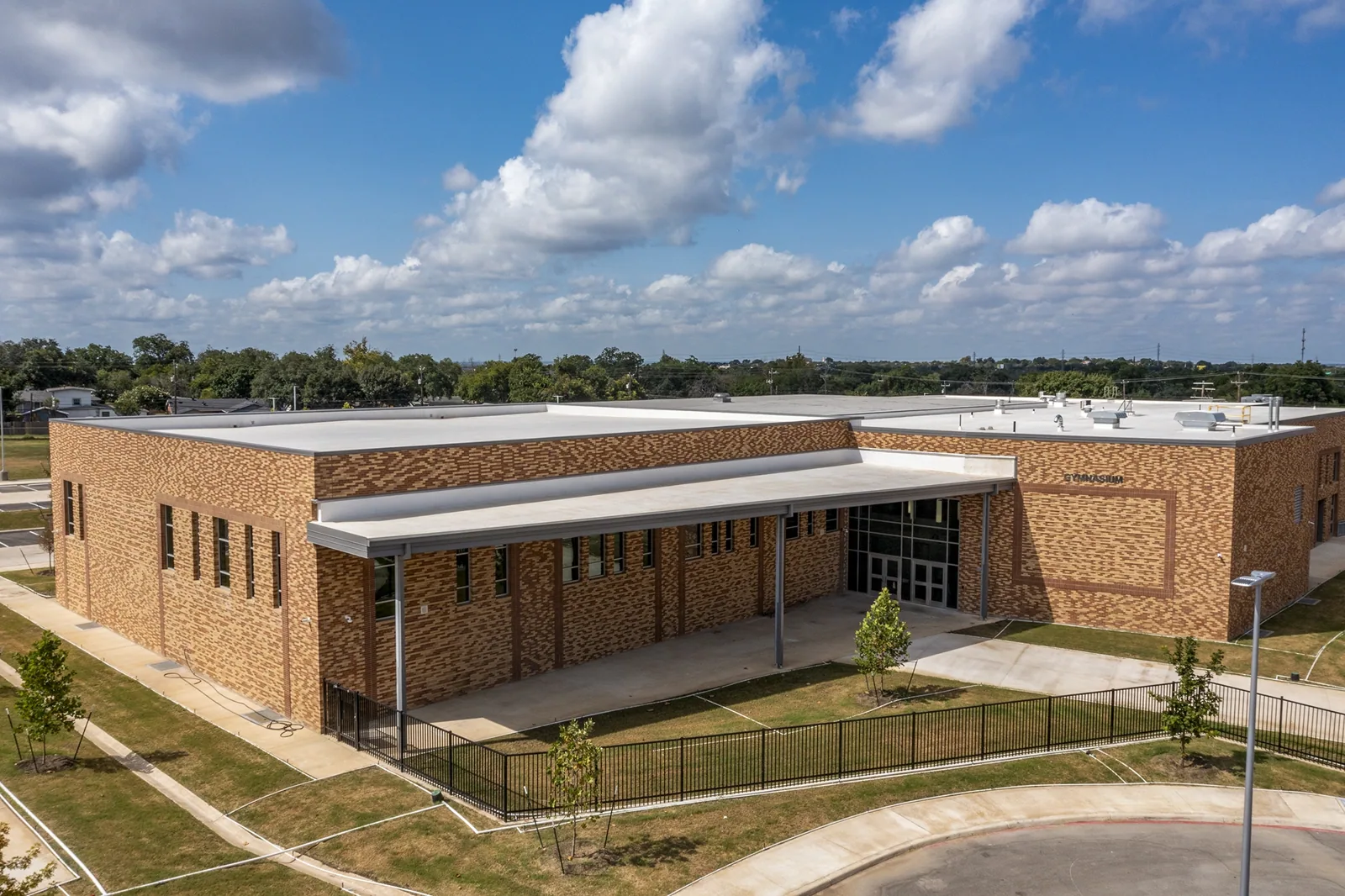
A school roof has to protect classrooms, offices, kitchens and equipment rooms while the building keeps its schedule. In Miramar, we inspect drains, seams, edge metal and penetrations, then mark the repair boundary before recommending a patch or larger replacement. School work in Miramar starts with the roof section, occupied rooms and access limits confirmed by facilities staff. We record the school's actual roof section, adjacent drains, and access limits before repairs are scoped. A commercial roof review in Miramar starts with what is wet, loose or sound.
Water over a classroom can travel beneath the membrane or insulation before reaching an interior finish. We compare the reported location with roof details and photograph confirmed conditions. A hands-on inspection helps the facilities team separate urgent repair from work that can fit a school break.
Where can roof work interrupt school use?
Roof access, loading, student movement and occupied rooms all affect the work zone. We agree on a material route, staging area and spaces that need protection. If a lift or delivery crosses a bus loop or main entrance, the property team can set a quieter work window. We limit the exposed area to what can be closed safely that day and identify who can approve concealed-condition work before removal starts.
A kitchen exhaust curb, classroom skylight or mechanical screen can make a repair more involved than its membrane area suggests. We inspect flashing and supports before setting a quantity. A plan for roofing around an occupied building records access, daily dry-in and protection needs. If kitchen operations matter below, a food-service roof plan offers another useful comparison for protecting active work areas.
What should be checked above a leak?
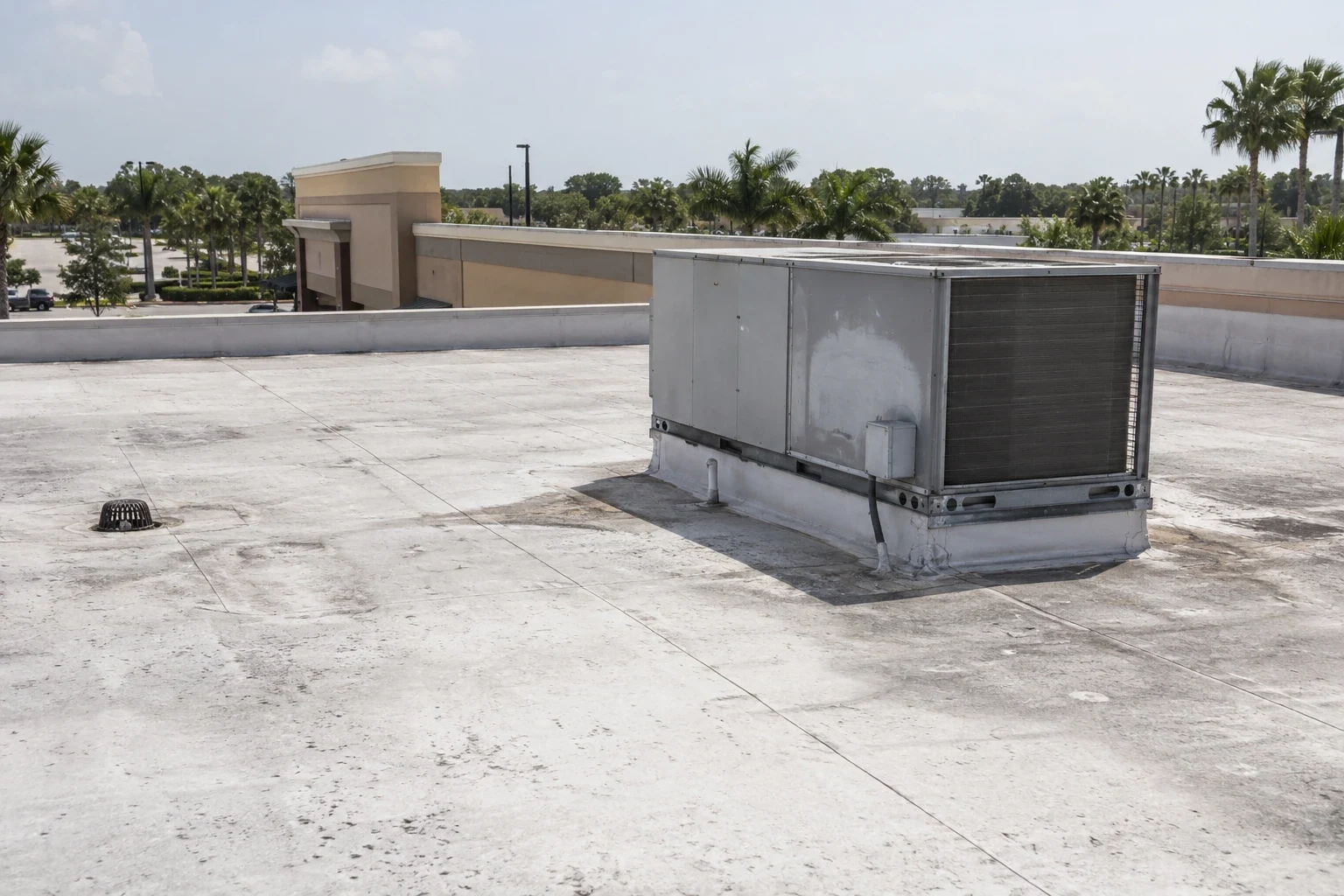
We follow the water path from the reported room to nearby drains, seams, penetrations and roof transitions. A split pipe boot, lifted flashing corner or open lap may be the entry point, but surrounding insulation still needs review. We mark visible damage and note where a test cut is needed before pricing concealed work. That keeps a ceiling stain from becoming proof that the whole roof has failed.
Miramar's principal routes include I-75, Florida's Turnpike, US 27 and State Road 7. The site contact confirms the actual gate, ladder or hatch and equipment clearances for the delivery plan. A separate campus roof comparison can help a district team think through phased access across different occupied buildings.
How should South Florida weather shape the review?
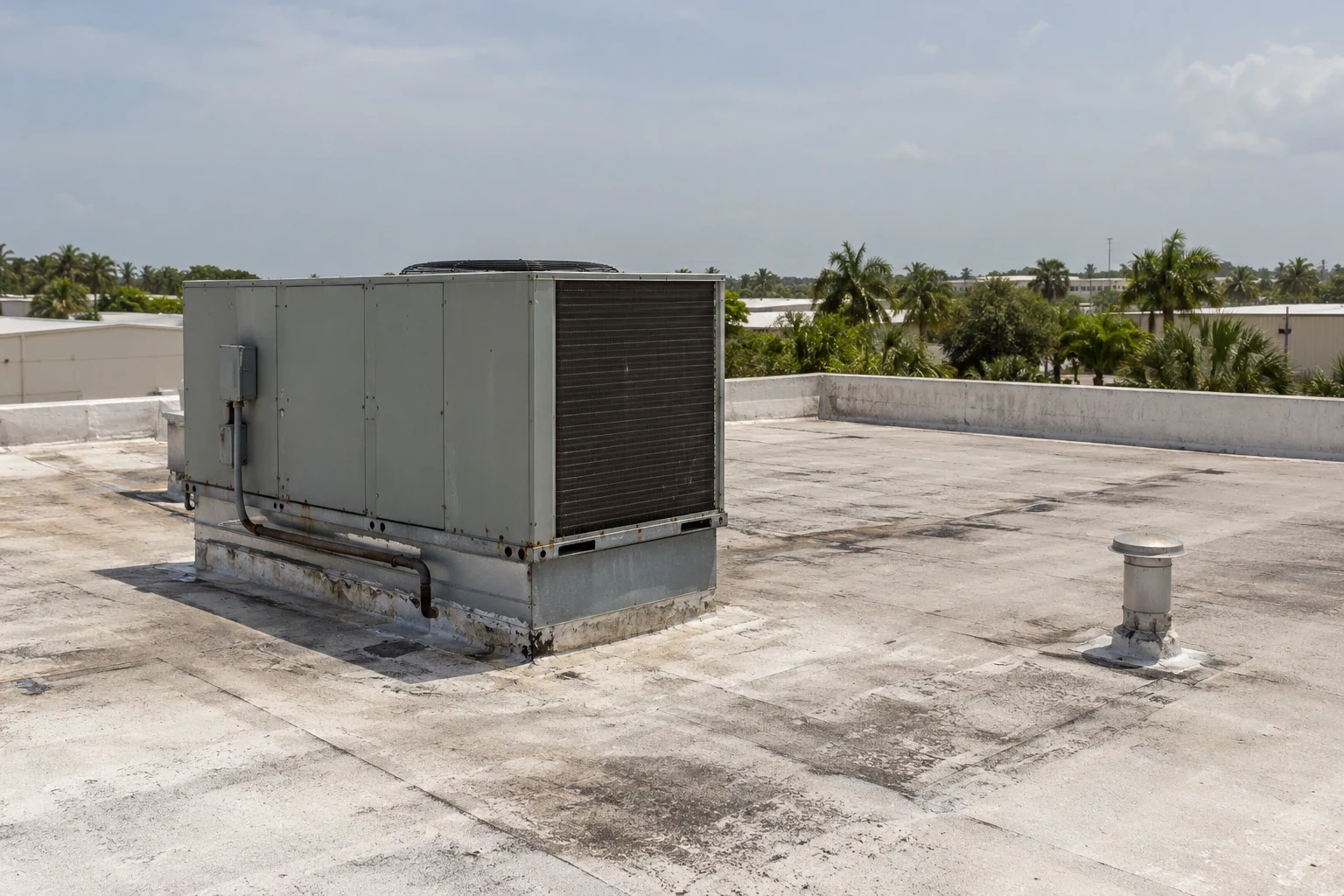
Before a school roof opening, we agree on classroom protection, debris control, and the point at which the area will be made watertight. After a storm, we check perimeter attachment, corners, seams, flashing and drainage, then compare observations with interior reports. A photo record made before temporary work changes the surface can help distinguish a new condition from older wear.
Heavy rain can expose a blocked drain or weak flashing tie-in. Wind can move edge components or rooftop items, while heat affects the work window and surface preparation. We plan around weather and the school calendar. When wind or water intrusion is suspected, a storm-related roof review documents the affected area and separates immediate dry-in from permanent repair. Inspection findings set the repair scope.
Can a repair fit the school calendar?
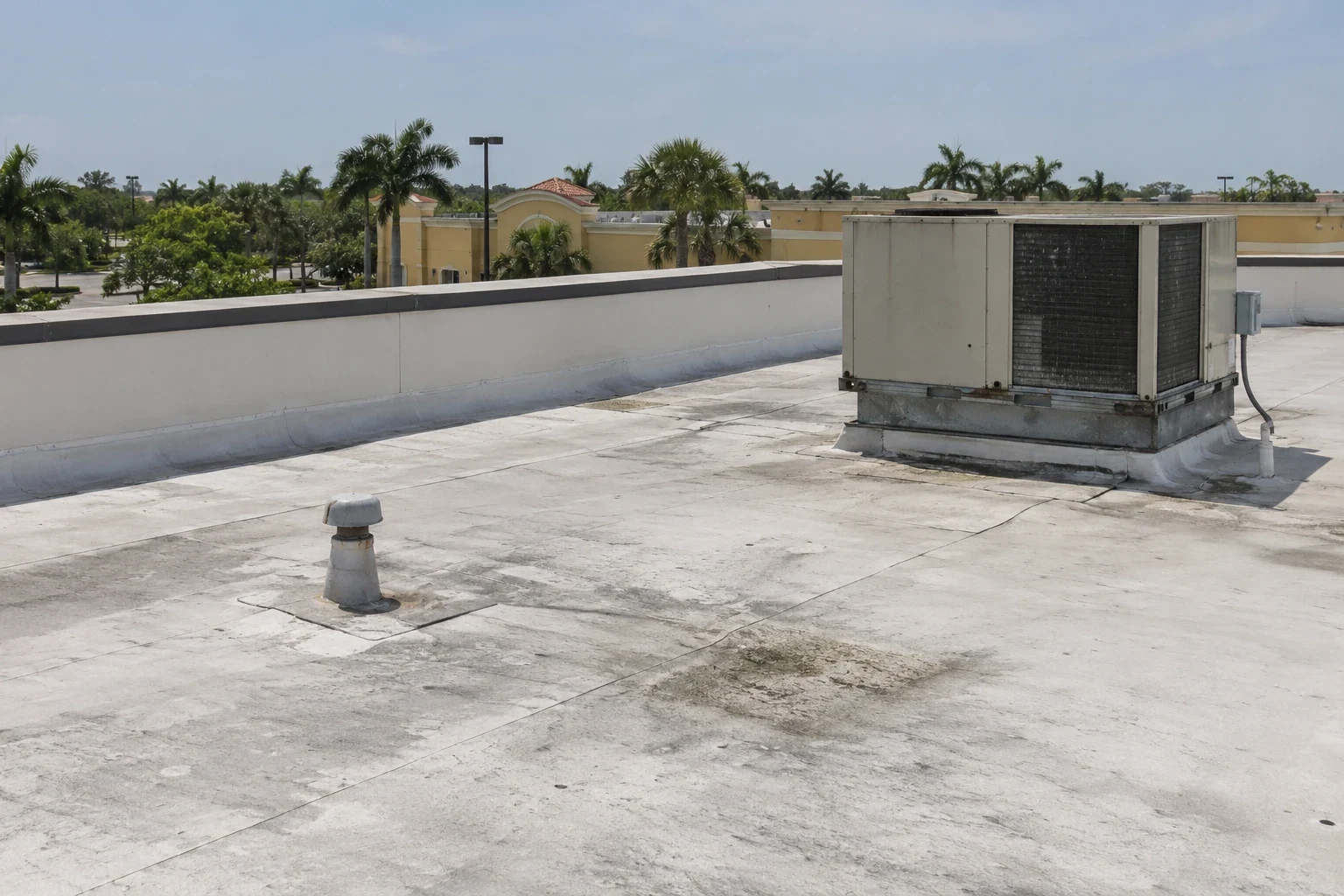
A repair can stay focused when the membrane is sound and dry around the defect, flashing can accept a secure tie-in, and the deck needs no broader work. We remove failed material to a stable boundary, prepare the substrate and install a compatible patch. Moisture beyond the opening or repeated failures at several details can make a small patch a delay rather than a solution. The report shows those limits so the facilities contact can compare options.
The inspection record should identify the school wing, roof section and drain associated with each report. A school roof still calls for inspection of its own assembly and details. An infrared moisture survey may locate areas for confirmation when wet insulation is not visible. If testing finds saturated material, the repair plan should include removal rather than another surface layer. A defined repair scope lists affected areas, flashing and closeout checks.

More about School Roofing
When does a phased replacement make sense?
Repeated seam separation, widespread wet insulation, failed attachment or deck concerns can move the discussion toward replacement. We compare roof sections by condition, drainage, penetrations and edge details. A recover is considered only when the existing assembly, moisture, deck and added height support it. Where tear-off is needed, the scope separates confirmed removal from conditions that require approval after opening the roof.
School calendars create useful work windows, but lead time, inspections, weather, equipment moves and daily tie-ins still matter. We sequence zones so the school team knows where crews are working and which rooms may need protection. A replacement assessment compares tear-off and recover paths, while a single-ply system review addresses membrane and attachment requirements. The owner can separate urgent leak work from sections suited to later funding.
What belongs in the school roof record?
Keep photographs, marked locations, repair limits, material notes and visit dates together. That record helps the facilities team track recurring leaks, plan access and explain why a section was repaired rather than replaced. We note areas not safely reached and conditions that need a test. A useful closeout lets the next inspector compare the same drain, curb or seam over time.
Daily closure identifies the dry-in point, protected drains and any restricted area below. Before leaving, we review the work zone with the site contact and confirm follow-up needs. Facilities staff should mark occupied classrooms, student routes and noisy-work limits before opening a roof section. Schedule a school roof review in Miramar. We will inspect the reported area, document what the roof shows and clarify the next repair or budget step.
Commercial Roofing Questions
Can roofing work happen while classes are in session?
The answer depends on the roof zone, access route, noise, lift placement and the rooms below. We coordinate the work window with the facilities contact, limit the exposed area and set a daily dry-in point. If a section cannot be isolated safely, we can compare a break-period phase with temporary protection and a later permanent repair.
How do you keep a roof leak from disrupting a classroom?
We first identify the affected room and any sensitive contents, then inspect the roof above and around the report. Temporary protection can control active water while the permanent repair is defined. The scope notes access, interior protection and the repair boundary so the school can decide whether adjacent rooms need a separate work window.
Does a storm warning mean the school needs a new roof?
No. The warning describes regional hazards, not the condition of this roof. We inspect edges, attachment, penetrations, seams, drains and interior signs, then document observed damage. A localized defect may call for repair; broad wet insulation or repeated attachment failure can support a replacement comparison.
What can make a school roof repair take longer?
Access approval, occupied-room protection, equipment coordination, wet insulation, deck condition and weather can change the sequence. We identify confirmed work first and flag concealed conditions for approval if removal reveals more. The school team can then match the work window to the affected rooms and the repair needed.
What does the owner receive after the roof work?
We provide a photo record tied to roof locations, describe the completed repair boundary and note conditions that need follow-up. The closeout should also identify materials used and any remaining access or testing limits. That gives the facilities team a usable record for the next budget review and maintenance visit.
Miramar, Pembroke Pines, Davie, Hollywood, Opa-locka, Miami Gardens, Miami Lakes and Doral in Broward and northern Miami-Dade County.
Request a Roof Assessment
Send the building address and what the roof is doing. We reply with a roof visit date and a written scope.