
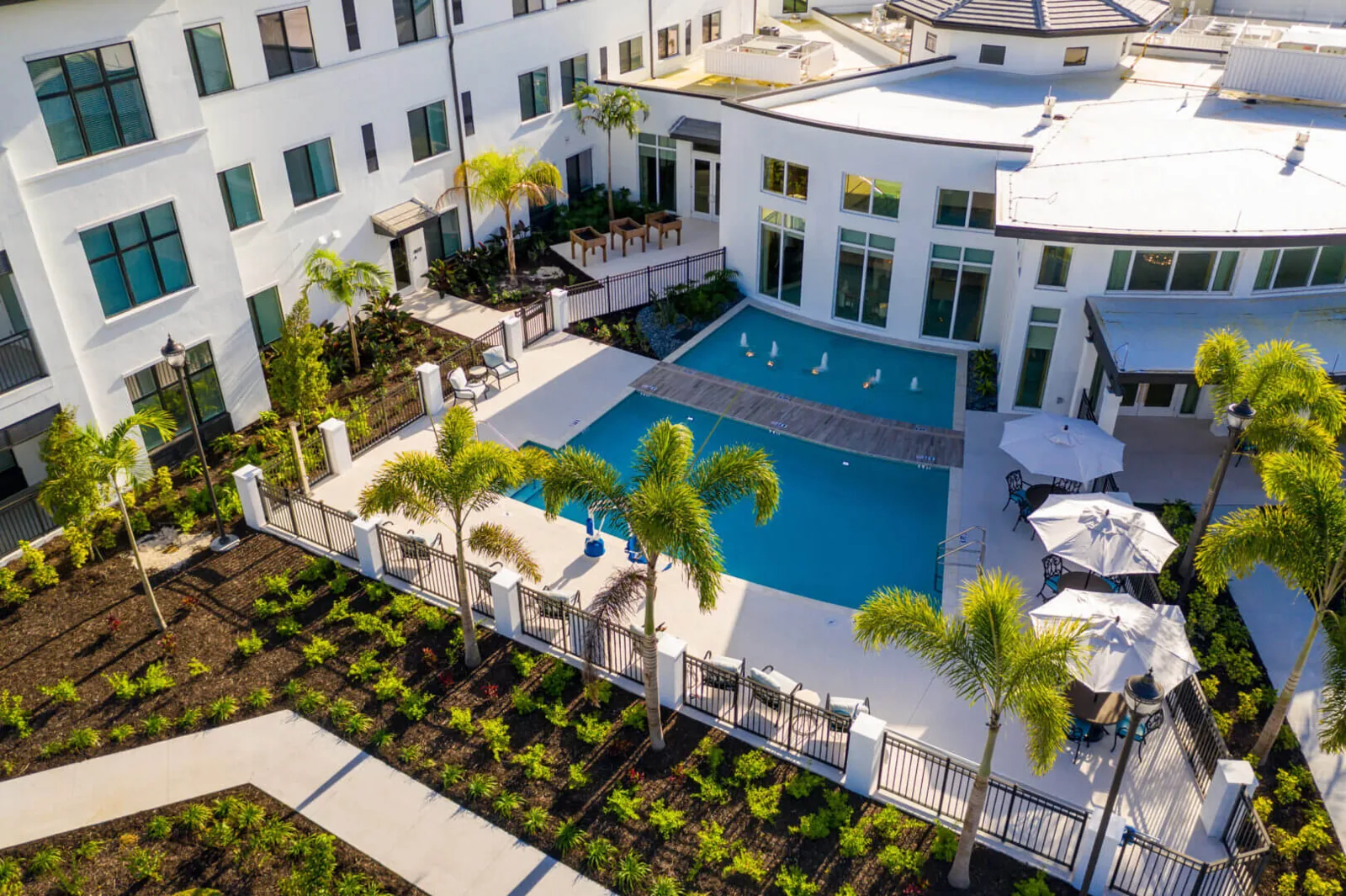
Senior Living Roofs in Miramar, FL
A senior living roof has to protect rooms where residents sleep, gather, receive care, and move through the day. Regional-activity areas appear alongside office parks and employment centers in Miramar's planning map, which separately marks commercial and industrial uses. At a property in the Miramar service area, we inspect the assembly, trace water paths, and plan access around occupied rooms and the building's operating schedule.
We look at drains, parapets, curbs, perimeter attachment, and the insulation below the surface. A stain near a resident room may not line up with the roof opening, so we compare interior reports with the roof plan and photograph each finding. That record helps the facilities lead decide whether a focused repair, moisture test, or replacement review is the next budget step. The facilities lead can identify resident areas, mobility routes and equipment that must remain in service. We limit exposure first, then plan permanent repairs around care needs and occupied areas.
How can the work protect daily routines?
Dining, therapy, deliveries, and resident rest periods overlap. Before opening a roof section, we confirm which rooms sit below it, how staff will communicate changes, and when materials can move through the property. We use a defined daily limit and a dry-in point so an opened area can be secured before the crew leaves.
A lift or material cart can affect pedestrian routes, emergency lanes, and visitor parking. The property contact marks those boundaries before staging. A phased plan for an occupied building separates removal, resident notice, and closeout. Staff also identify who can approve added work if concealed damage changes the repair boundary.
Resident privacy also belongs in the plan. We keep photographs focused on roof conditions and avoid capturing people or private areas. The facilities lead receives the photo record, roof location, and next decision in plain terms. If an interior ceiling needs protection, we coordinate that step with staff instead of treating it as an afterthought. A schedule that respects care operations makes it easier to keep the roof scope moving without losing track of the building.
What does the first roof review settle?
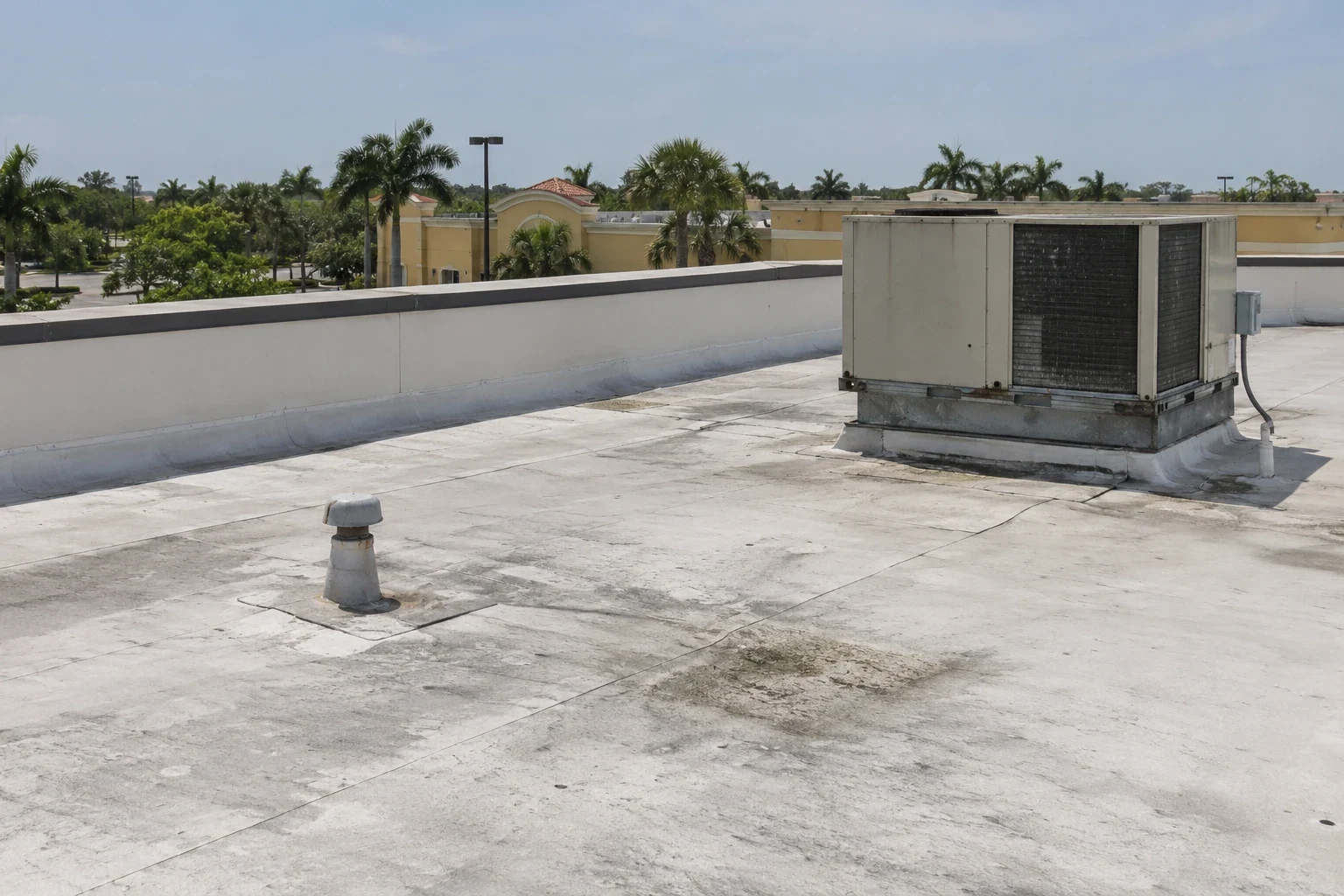
A roof review starts with the known symptoms, repair history, access restrictions, and any areas where staff have seen water. We inspect membrane seams, wall transitions, penetrations, drains, overflow routes, and edge metal. We compare those observations with interior locations, then mark conditions that need a closer look. A written commercial roof inspection distinguishes visible defects from areas that may require testing before the owner commits to removal.
Resident buildings need a drainage review that accounts for occupied interior zones, roof access and maintenance coordination.
I-75, US 27 and the Turnpike are principal links near Miramar, with other regional routes nearby. The facility contact confirms the gate, delivery window and staging point for scheduled work. We record equipment clearances and the conditions that support a patch, moisture test, or capital decision.
How do you handle wet insulation?
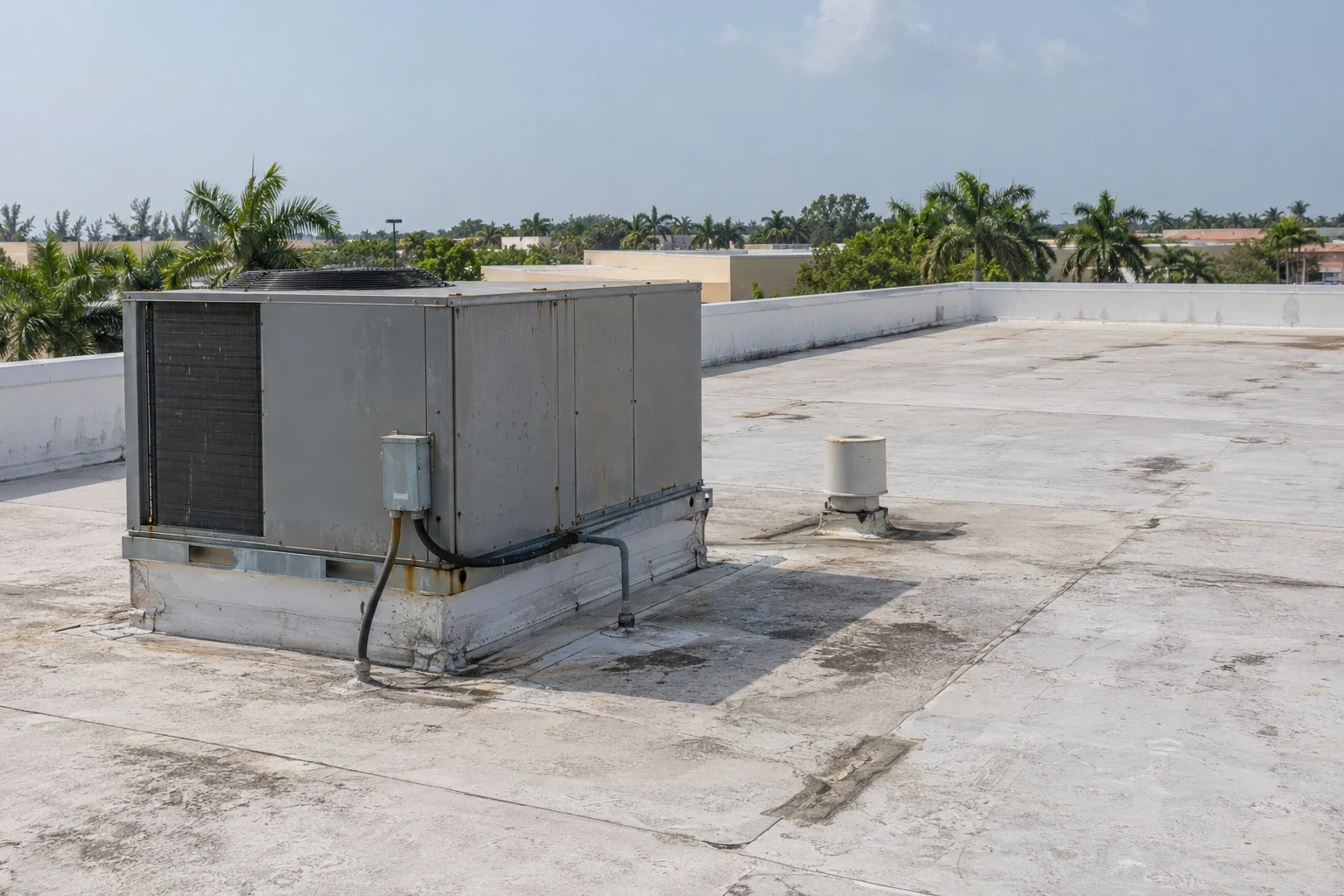
Water can travel beneath a membrane before it appears on a ceiling. A soft area, lifted seam, or recurring stain can point to moisture, but the inspection needs to establish what is wet and how far it extends. We mark suspected areas, compare them with drain paths and penetrations, and recommend testing when the surface does not answer the question. An infrared moisture survey can guide follow-up openings; confirmed wet insulation may need removal rather than another layer above it.
For an occupied care area, we identify where an opening would occur, how the room below can be protected, and who approves concealed-condition work. The repair boundary should follow sound material, not an arbitrary rectangle. If the deck is affected, the proposal states that separately from insulation, membrane, flashing, and ceiling protection. This lets the owner see which quantities are confirmed and which may change after a test opening.
A blocked strainer, failed drain tie-in, low roof area, and wet insulation call for different work. We separate those findings so a drain repair does not become an unmeasured membrane replacement. The facilities lead can compare the evidence before setting the next budget step.
Which roof systems can be reviewed?
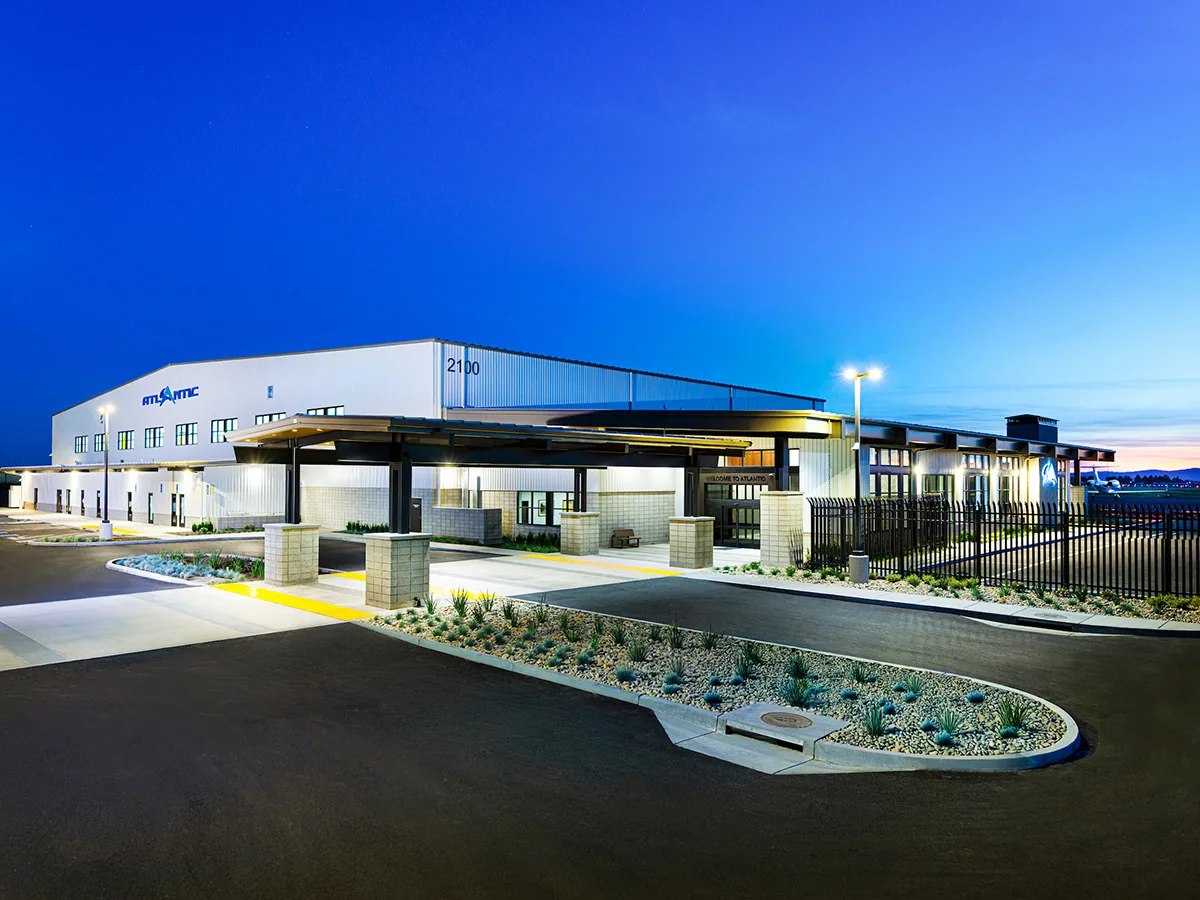
Senior living properties may have different roof assemblies across additions, dining areas, or service wings. We identify the existing membrane before recommending a repair material. TPO, PVC, EPDM, KEE, modified bitumen, built-up roofing, metal, and coating systems each have different seam, flashing, and attachment details. The owner’s documents and the roof itself guide the comparison. A hospital roof review has related concerns around occupied care areas, while an apartment roof plan may involve different access and resident coordination.
A local repair works when the surrounding material is sound and a compatible tie-in can be made. Repeated seam failure, widespread wet insulation, unstable edges, or deck repairs can shift the decision toward replacement. A recover is considered only if existing layers, moisture, load, and edge height support another assembly. We compare the repair boundary with the larger scope instead of assuming that a coating or overlay will solve a concealed condition.
After wind or rain, we record moved flashing, punctures, and interior water entry before temporary work changes the evidence. A storm-related roof review ties the repair to a roof location. Before work is planned, coordinate protection below the roof with staff responsible for resident access.
More about Senior Living Roofs
What changes the budget and timing?
Cost depends on roof layers, moisture, deck condition, insulation, edge metal, drains, equipment, disposal, access, and interior protection. Timing also changes with rain, procurement, resident notice, and the number of sections that can be opened and secured in a work window. We list known work separately from concealed conditions that require approval after removal. The owner can compare a targeted repair with a phased replacement using the same field record.
Pembroke Pines reports commercial development exceeding ten million square feet. Retail, office and industrial uses account for that total, with much activity concentrated along Pines Boulevard. Those nearby building uses can inform portfolio coordination across the two cities. Facilities teams still need property-specific drawings, access rules, and equipment schedules. In Miramar, staff can also use the Pembroke Pines service area for nearby commercial coordination when a portfolio includes buildings on both sides of the city line.
Closeout gives the facilities lead photographs, repair locations, materials, and maintenance observations. A preventive roof maintenance program tracks drains, seams, and penetrations between inspections. Recommended checks follow the assembly and observed conditions.
Commercial Roofing Questions
Can roof work continue while residents are in the building?
We plan the work around resident areas, staff routines, deliveries, and emergency access. The daily opening limit and dry-in point are agreed before mobilization. If a room below the work needs protection, that coordination is included in the sequence.
What happens when a ceiling stain returns?
A recurring stain needs a roof review that compares its location with seams, drains, curbs, and the water path. We document what is visible and identify testing if moisture may extend beneath the membrane. The repair quantity follows the confirmed boundary.
Does a storm report mean a roof must be replaced?
No. We inspect the roof for movement, punctures, displaced flashing, drainage problems, and interior water entry. A local defect may need a repair; broader wet insulation or attachment failure can call for a larger comparison.
Who approves added work if the deck is damaged?
The facilities lead or owner names an approval contact before work starts. We photograph concealed conditions, describe the affected area, and separate deck work from the original membrane and flashing scope before proceeding.
What should a roof closeout include for the care team?
The closeout records completed areas, photographs, materials, temporary protection removed, and any remaining follow-up. Staff can use the marked roof plan to connect future reports with the repaired drain, seam, or penetration.

Miramar, Pembroke Pines, Davie, Hollywood, Opa-locka, Miami Gardens, Miami Lakes and Doral in Broward and northern Miami-Dade County.
Request a Roof Assessment
Send the building address and what the roof is doing. We reply with a roof visit date and a written scope.