
Commercial Roofing in Young Circle and Hollywood Boulevard District, Hollywood, FL
Buildings near Young Circle and Hollywood Boulevard call for a roof scope that respects mixed uses and a compact district. Hollywood's eastern district runs from Polk Street to Pembroke Road and Federal Highway to Dixie Highway, including Young Circle. The historic business district follows Hollywood Boulevard from 21st Avenue to Young Circle. Buildings in these mixed-use blocks can have different roof access and operating hours, so we confirm each work window with the property contact. We begin with roof access, drainage, seams, wall transitions and the interior report. A commercial roof inspection records what is visible and where more testing may be needed. The work plan then fits the building's schedule and protection needs. Roof work in the Historic Hollywood Business District needs its own access plan, roof-edge review and preservation checks.
What changes between the circle and the boulevard?
A district boundary helps locate a property, while the building's use sets the practical questions. A commercial tenant may need access kept clear. A mixed-use property may need tenant notice and protection below. We confirm roof entry, available staging, equipment clearance and any hours when work can occur. Then we inspect the assembly instead of guessing from the street or land-use designation. We check seams, penetrations, drains, edge metal and prior patches, and mark each finding on a roof sketch.
Hollywood's economic-development program supports business owners, investors and developers. A roof review turns that broad activity into a specific maintenance or capital decision for the property. We identify what is urgent, what remains serviceable and what cannot be confirmed without testing. A photo-based condition report connects the observation to its roof area and notes what the next visit should resolve. If the building is part of a larger ownership group, keeping records by property avoids blending one roof's findings with another's.
For a budget request, we distinguish the immediate correction from work that depends on a test or future access. That keeps the approval tied to the condition already documented and makes the next visit easier to scope.
How can a roof walk trace water?
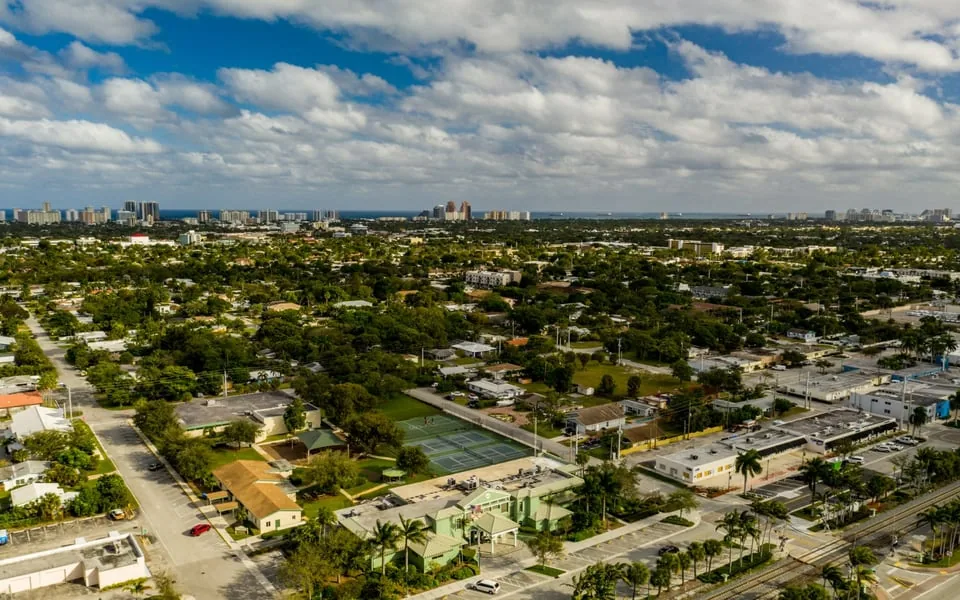
Water can enter at a curb or seam and travel before it shows on a ceiling. We compare the reported interior location with drains, scuppers, wall flashing, membrane laps and rooftop equipment. If ponding is present, we note where it sits and whether it reaches a detail. We check the insulation indicators and look for previous repairs that may have changed the path. The owner receives a map of confirmed conditions and a clear statement of what would require a test opening.
For a roof request between Hollywood Boulevard and Young Circle, include the address and note whether work touches a designated historic property; that can affect review. After a reported weather event, we inspect drainage and attachment at the building before setting scope. A post-hurricane roof review checks the actual assembly and interior evidence. A separate drain and scupper check can show whether water movement is limited by an outlet, a surface condition or a nearby flashing defect.
What if the property is designated historic?
Designated historic properties may be subject to Hollywood preservation review. The designation does not identify a roof's age or construction, so we inspect the existing assembly before setting scope. We document the existing profile, edge conditions, penetrations and any visible repair layers. If the property is subject to preservation review, the owner can coordinate the roof scope with the relevant city process before materials or details are changed. We record the submitted and approved approach so field work follows the permitted direction.
Water control remains part of that conversation. A roof replacement may need to preserve a visible edge or parapet detail while correcting the membrane and flashing beneath it. We compare repair, restoration and replacement based on the observed assembly, not the word historic. The cost can change with access, hand work at transitions, removal depth, insulation and deck findings. A replacement plan should identify those variables, the areas included and any condition that could change the quantity. Where only a local defect is established, a contained repair may be the simpler scope.
How do crews work around district activity?
We agree with management on the access route, staging point, work hours and protected areas before opening the roof. If a room below contains sensitive equipment or cannot be interrupted, we note it and phase the work accordingly. Materials stay within the approved area, and each open section receives a dry-in plan before removal begins. Should the crew find wet insulation or a compromised deck, we photograph it and pause for approval before extending the scope.
Hollywood's transportation network includes the Turnpike, I-95, CSX and FEC railways. For a Young Circle delivery, site management confirms the property's loading plan. For an occupied property, a phased reroof sequence can reduce conflicts when the roof and schedule permit. A property contact near Young Circle should identify the active roof zone, pedestrian access and work-hour limits before scheduling. Near Young Circle, an emergency response scope starts with pedestrian routes, occupied areas and a safe roof-entry point. We document temporary protection separately from the permanent work so the owner can see what remains.
More about Young Circle and Hollywood Boulevard District
What should the closeout show?
Keep dated photographs, the marked roof sketch, repair limits, approvals and closeout images with the building file. The record should say what was repaired, what needs follow-up and which area was not accessible. If a test opening or removal showed concealed moisture, include its location and the owner's direction. That gives the next budget review a sound starting point rather than a guess based on the last invoice.
On a roof in the Harrison and Tyler historic districts, record drainage, flashing and visible edge details before planning work that changes them. Where a coating is under consideration, first check the substrate, attachment, moisture, drainage and details. A restoration review should explain preparation and repair needs before any coating is included. The next step may be a patch, a test, scheduled maintenance or a larger replacement plan. We will tie that recommendation to the roof conditions recorded during the visit.
Where the next step is maintenance, record the starting condition before cleaning or adjustment. A clear drain does not resolve a split membrane lap, and a repaired lap does not confirm that water can leave the roof. We check both the outlet and the surrounding surface, then note whether the observation was made during dry weather or after rain. That detail helps the property team compare future photographs and decide when another visit is useful.
Commercial Roofing Questions
Does being inside the Young Circle district mean a roof needs preservation approval?
Not by itself. We document the building and proposed roof details. The owner can confirm whether the specific property and scope require review through Hollywood's preservation process before work is authorized.
Can a leak be traced from a ceiling stain near Hollywood Boulevard?
We compare the interior report with drains, seams, curbs and wall transitions above it. Water can travel beneath a membrane, so the opening is confirmed through roof evidence and testing when needed.
How do you keep a repair from expanding unexpectedly?
We mark the approved boundary and state what concealed condition could change it. If removal exposes wet insulation or deck damage, we photograph it and obtain direction before extending the work.
What weather-related details do you inspect?
After a reported event, we check attachment, edge metal, seams, flashing and drainage on the actual building. The local hazard outlook informs the review, while the roof itself establishes any damage.
Can work be phased around businesses in the district?
We coordinate roof access, hours, staging and protection with the property contact. Sections are opened and secured in sequence, with an end-of-shift dry-in plan for each active area.
Miramar, Pembroke Pines, Davie, Hollywood, Opa-locka, Miami Gardens, Miami Lakes and Doral in Broward and northern Miami-Dade County.
Request a Roof Assessment
Send the building address and what the roof is doing. We reply with a roof visit date and a written scope.